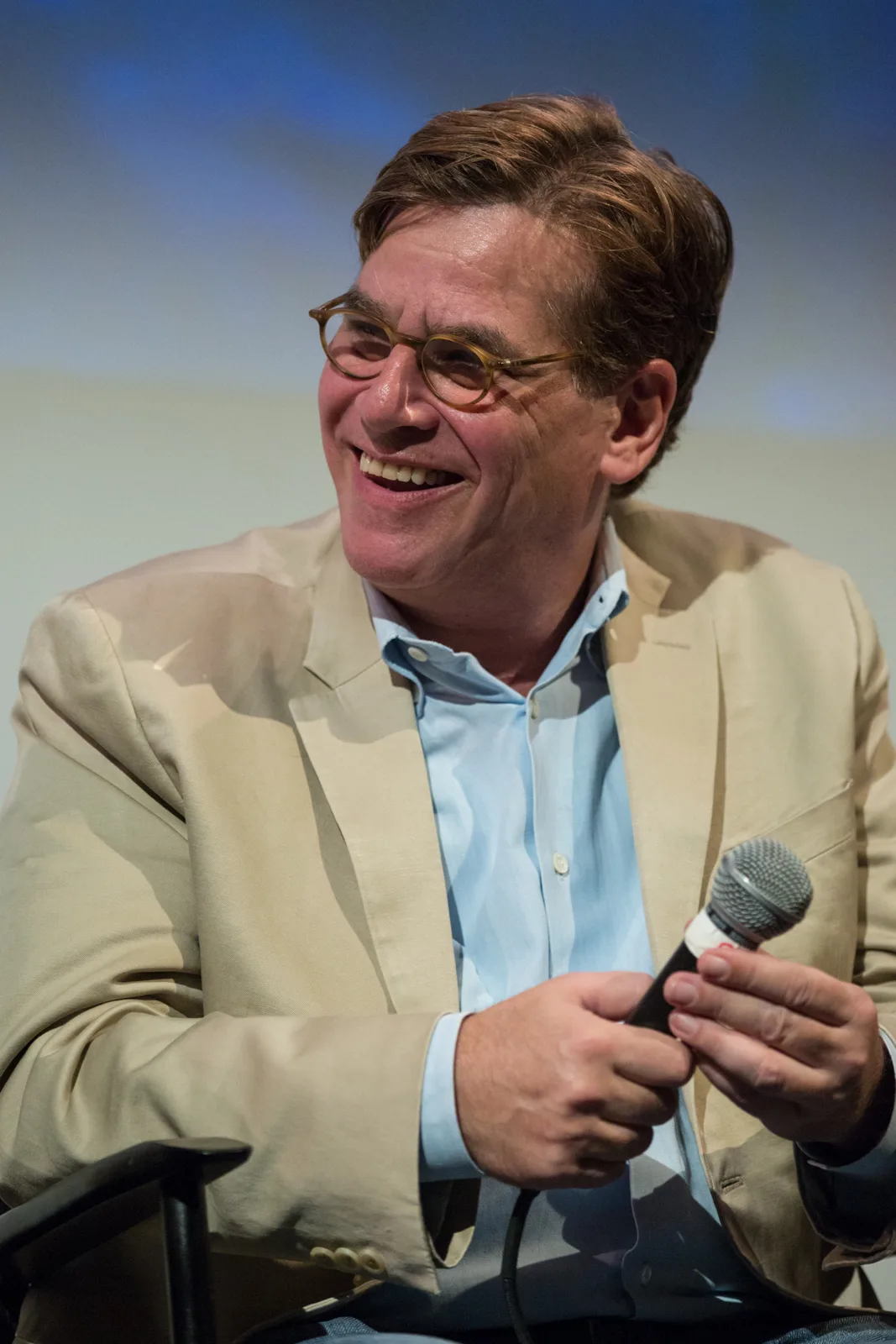
A family business CEO who inherits the job answers to two boards at once. One is formal, with directors, minutes, and fiduciary duty (the legal obligation to act in the company's interest). The other is the dinner table, where the company's history is personal history and every decision is remembered longer than it would be at any outside firm. That double audience is the defining condition of third-generation leadership.
The practical question this piece examines is simple to state and hard to answer: can a leader live with a job that was never entirely chosen? Succession in a family firm is less a handoff than a long negotiation between what the company needs and what the family expects. The negotiation rarely ends with the title.
Merriam-Webster defines a profile as a concise biographical sketch, but also as a side view, a representation in outline. That second sense fits the inherited CEO well. From the outside, the role looks like a silhouette: same name on the door, same family crest on the letterhead. The interior, where the real work of family business succession happens, is what the outline hides.
What does a third-generation CEO actually inherit?
The first inheritance is not the company. It is a story about the company, told at family gatherings for decades. The founder's risks become legend. The second generation's expansions become baseline. By the third generation, the new CEO inherits a narrative in which every major move has already been made, and made well, by someone with the same surname.
That narrative has real consequences. Employees who served under the grandfather may measure the grandchild against a standard nobody can meet, because the standard is memory, and memory improves with age. Outside advisers see it too: the successor is often judged less on results than on resemblance.
The second inheritance is structural. Family firms tend to concentrate ownership, management, and emotional attachment in the same small group. A nonfamily CEO can resign. A family CEO who resigns changes the family. Resignation is not just a career decision; it is a family event, and everyone at the table knows it.
The third inheritance is ambiguity itself. In many family firms, the lines between family council, board, and management are drawn late, or drawn in pencil. The successor often spends the first years of the job clarifying authority that the organization assumed was already clear.
Why is family business succession harder than an ordinary handoff?
In a public company, succession is a process with documents: a search committee, a transition plan, a named successor, a date. In a family firm, the process runs on two tracks at once. The formal track produces governance paperwork. The informal track produces dinner conversations about who is ready, who is loyal, and who was overlooked.
When the two tracks disagree, the formal one usually loses. That is not corruption; it is proximity. Family members can reach the CEO in ways directors cannot, and the CEO can reach family members in ways no outside executive could. The result is a decision environment where authority is real but never exclusive.
The stakes are practical, not sentimental. A muddled handoff can push capable nonfamily executives out the door, because they cannot tell whether the heir apparent holds power or merely holds a title. It can also freeze needed change, since a third-generation leader who reverses a second-generation decision is, in the family's eyes, criticizing a parent.
How does the inherited CEO build actual authority?
The pattern that recurs in well-run family transitions is deliberate differentiation. The successor earns standing by doing something the predecessor could not or did not: entering a new market, professionalizing the finance function, resolving a dispute the family had avoided. The point is not novelty for its own sake. The point is to give the organization a reason to follow the new leader that is independent of the last name.
Governance structure does the rest of the work. An independent board with genuine outside directors converts family expectations into documented decisions. A family charter or constitution, even a short one, moves the rules of engagement from custom to writing. So does a clear employment policy for family members: what qualifies a relative for a job, and what does not.
Readers who want the formal machinery in detail will find it in our explainer on Corporate Governance Explained: Who Watches the Watchers at a Company. The same principles apply with extra force in a family firm, where the watchers and the watched share holidays. Readers following this should also see Corporate Governance Explained: Who Watches the Watchers at a Company.
What this means for the successor is that authority is built, not bestowed. The title arrives on a date. The authority arrives years later, if the leader does the unglamorous work of separating the family's voice from the company's voice.
Could you live with this job?
The honest answer, for most people who take it, is: partly. The role offers things no outside executive job offers, including continuity of purpose, a long time horizon, and work that is literally a family matter. It also demands things outside jobs never ask: absorbing a legacy rather than creating one, managing relatives who cannot be fired the ordinary way, and accepting that some decisions will be second-guessed at Thanksgiving regardless of outcome.
The trade-off is concrete. An inherited CEO trades autonomy for belonging. Leaders who thrive tend to be the ones who want the belonging enough to accept the reduced autonomy, and who then build governance structures strong enough to protect the company from the family, including from themselves. Leaders who want the autonomy more tend to leave, and the honest family firms plan for that possibility rather than treating it as betrayal. This connects to our earlier piece, Enforce and Protect Act Sets Fixed Deadlines for Customs Duty-Evasion Investigations.
Cambridge's dictionary lists a third sense of profile: degree of public exposure. A family CEO lives at a permanently elevated one. Every success is credited to the name, and every failure is charged to it as well. That visibility is not a perk of the job. It is one of its costs, and it compounds with each generation, because the family's public story grows longer and the room for a private self grows smaller.
What should a family do before the handoff begins?
The durable practices are unglamorous, and they work best started early, ideally a decade before any transition.
- Separate the roles in writing. Ownership, board seats, and management jobs are three different things. A family charter that says so prevents most succession disputes before they start.
- Let the successor succeed elsewhere first. Experience outside the family firm gives the heir both skills and credibility that the last name cannot supply.
- Give the board real independence. Outside directors arbitrate between family interest and company interest, and their presence changes how both sides behave.
- Plan for the successor who declines. A succession plan that only works if the heir says yes is not a plan. It is a hope with paperwork.
- Name the informal rules. Every family firm has them. Writing them down, even imperfectly, turns invisible obligations into negotiable ones.
None of this removes the weight of inherited expectations. It distributes the weight across structures instead of concentrating it on one person at one dinner table. That is the most any succession plan can honestly promise, and for a third-generation CEO deciding whether to accept the role, it is usually enough to make the question answerable.
What the evidence establishes, and what it does not
What the record establishes is definitional: a profile is a sketch, a side view, a level of exposure, and every inherited CEO lives inside all three meanings at once. What no general treatment can establish is the specific arithmetic of any particular family, including who is ready, who is willing, and what the company can survive. Those facts live in board minutes and family conversations that no outside writer can see. The honest conclusion is that the structure of the challenge is knowable, and the outcome never is, until the family makes it so.