Board minutes are the official record of director action: what was considered, what information the directors had, what advice they received, and what they decided. Their legal function is defensive — in fiduciary litigation the minutes are the primary evidence of process, and Delaware courts repeatedly distinguish boards that deliberated in a documented way from boards that ratified outcomes after the fact. Around them sits the records regime: statutory retention requirements for corporate records, and shareholders' inspection rights — Delaware Section 220's books-and-records demands — which make the quality of what was written, and what was deliberately not written, a recurring litigation subject.
USA Post publishes information about governance practice, not legal advice.
What should minutes actually contain?
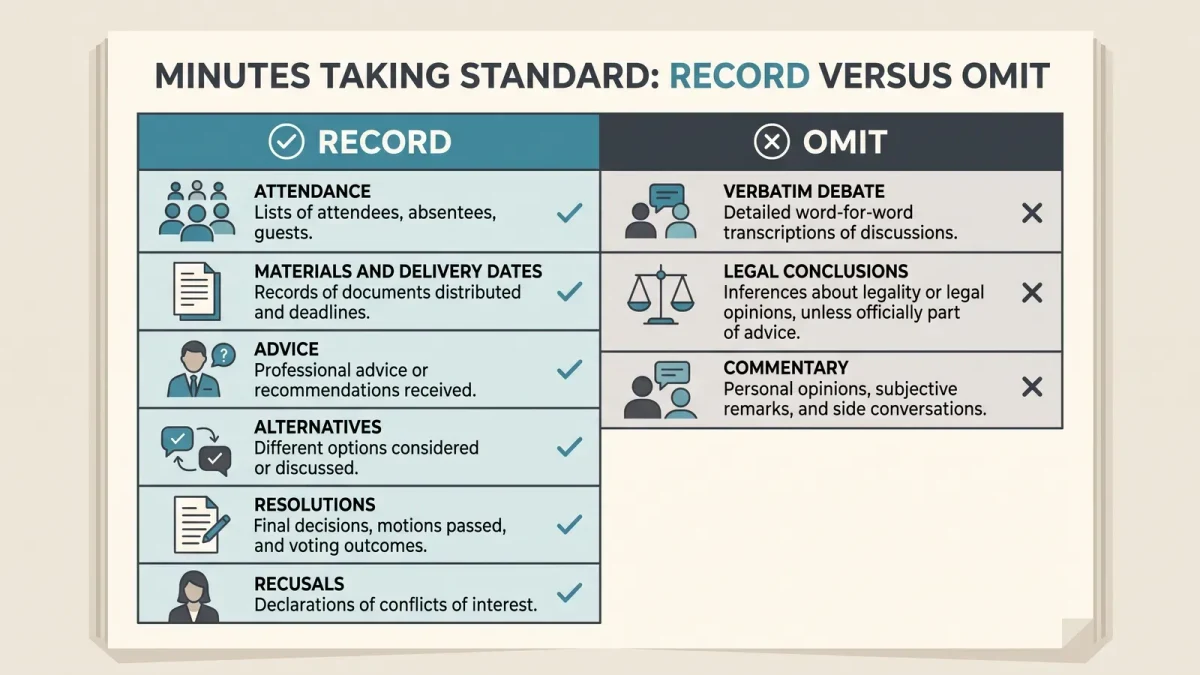
Enough to show an informed, deliberative process, without transcribing debate. The professional standard: attendance and quorum; the matters presented, identified by document — banker presentations, diligence summaries, counsel's advice described by subject; the questions or concerns raised (described generally where sensitive); alternatives considered; and the resolution adopted, with recusals and dissents noted precisely. What minutes should not contain: verbatim debate that exposes individual directors to examination on phrasing; legal conclusions ("the process was fair") that a court may later test; and commentary exceeding what the board actually did. The Corwin/MFW era sharpened the stakes: cleansing votes and special-committee protections are only as good as the record showing an informed process — the minutes, the presentation materials and their delivery dates.
Who prepares and approves them, and when?
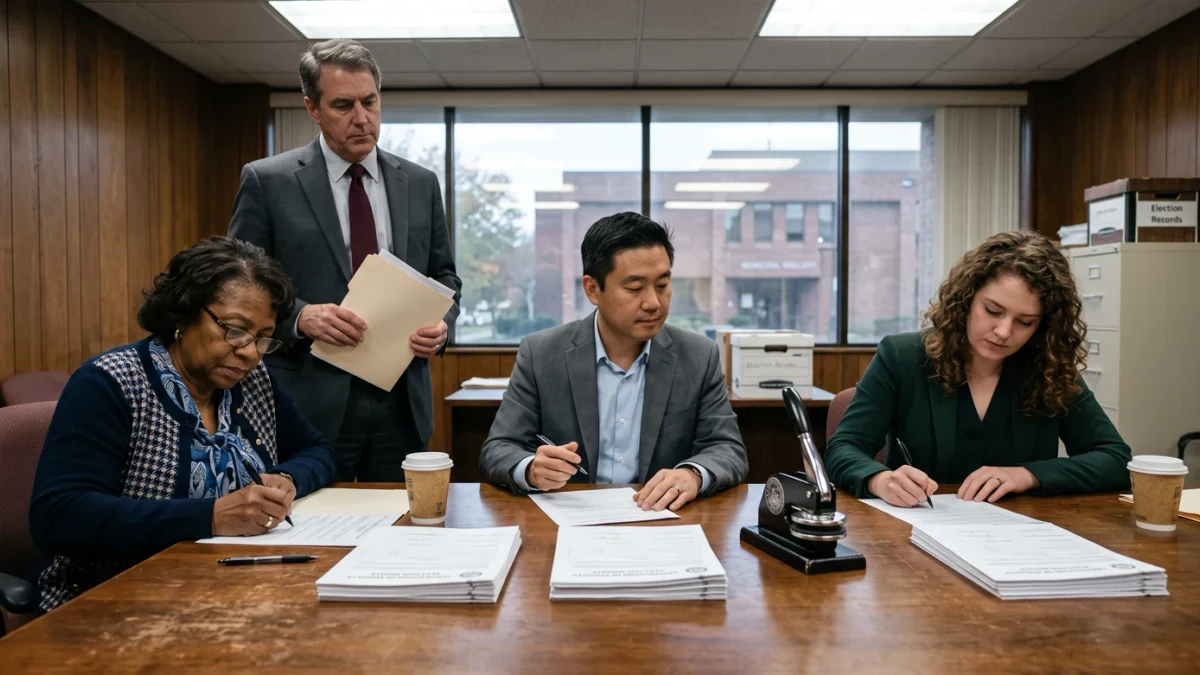
Usually the corporate secretary, drafted from notes and circulated in draft to directors (with counsel reviewing privileged matters), then approved at the next meeting — with corrections noted rather than rewritten. Draft minutes are generally privileged work product in Delaware; approved minutes are the corporate record. Timing discipline matters in deal litigation: minutes finalized months later, after suits arrive, invite the argument that the record was constructed for litigation — the fact pattern several Chancery opinions criticized where approval trailed the events suspiciously. Best practice: approve within one to two meetings of the events, and circulate the materials the board actually received as attachments — the "board package" is part of the process evidence.
What are the retention obligations?
Statutes and litigation duty together. Delaware General Corporation Law Section 220(c) defines the records every company must keep — minutes of shareholder and director meetings, accounting books, and a record of shareholders — and permits inspection; tax, employment and industry rules add their own schedules (typically seven years for financial records). The litigation overlay: once litigation is reasonably anticipated, the preservation duty attaches to minutes, board packages, and related communications — routine destruction must stop, a legal hold issues, and retention extends to drafts where they matter. The recurring scandal pattern — minutes "missing" or reconstructed after the fact — converts a governance weakness into a spoliation issue, and courts treat unexplained gaps as adverse evidence.
How does Section 220 books-and-records work?
It is the shareholder's pre-suit discovery tool. A stockholder with a proper purpose — investigating suspected mismanagement, in contemplation of derivative litigation — may demand inspection of books and records, including board minutes, committee records, and materials the board considered, subject to scope and privilege negotiations. The demand's shape matters: Amalgamated Bank v. Yahoo! (2016) required courts to consider emails and informal communications where they were the real decision record — the recognition that boards sometimes decide outside formal meetings — and the Supreme Court's Yahoo! reversal noted the tool's continued primacy while Chancery's later decisions (including Kandell v. General Caramel-line and 2023-2025 rulings) balanced breadth against intrusion, typically ordering production of formal board materials plus targeted custodial files. Defense practice: companies that maintain complete, deliberative minutes satisfy Section 220 demands efficiently; companies whose minutes are thin face broader orders reaching into email — the stronger the formal record, the narrower the compelled discovery.
How should boards build the record in practice?
- Approve a minutes standard: what gets recorded, in what detail, with counsel's role defined — applied consistently, not just in deal settings.
- Circulate board materials in advance and minute their delivery; last-minute handouts should be described with their timing.
- In conflicted or major transactions, minute the process arc: advisors retained, sessions held, negotiations advanced, alternatives evaluated — the fair-dealing narrative courts later reconstruct.
- Keep executive-session minutes: even a brief record that the independent directors met alone, with subject noted, preserves the governance fact without exposing content.
- Calendar retention and holds: statutory schedules enforced, litigation holds extending them, and an audit trail for corrections.
Are good minutes a guarantee?
No — a defense, not immunity. Courts examine substance: minutes describing deliberation that plainly did not occur are discounted, and the underlying documents are always ordered alongside. But the asymmetry is stark: the documented board gets its process credited at the motion-to-dismiss stage; the undocumented board litigates entire fairness with an adverse record. Minutes are the least expensive governance control a company maintains — a discipline of writing down, contemporaneously, that the directors did the work.