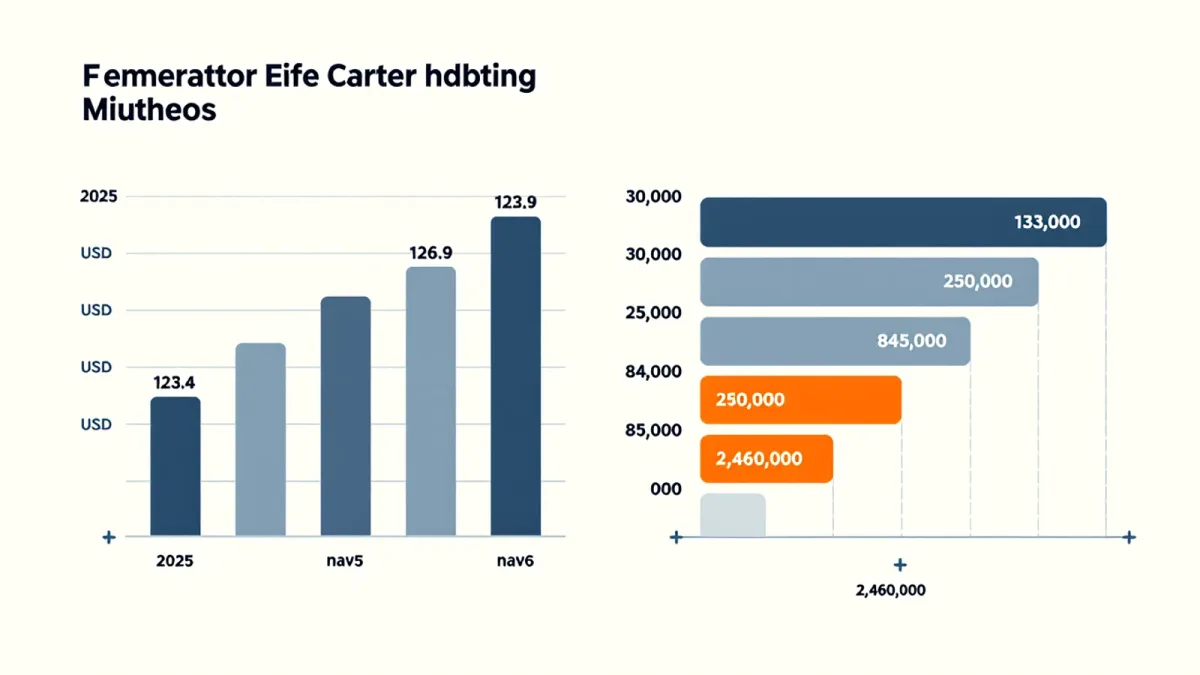
The Hart-Scott-Rodino Antitrust Improvements Act of 1976 requires parties to deals above a size-of-transaction threshold — adjusted annually, roughly $126.4 million for fiscal 2025 — to file notification forms with the Federal Trade Commission and the Department of Justice Antitrust Division and to observe a waiting period, currently 30 days, before closing. A second request extends the investigation by months. Two separate prohibitions police the transition: closing during the waiting period (gun-jumping under HSR) and coordinating competitive behavior before ownership transfers (gun-jumping under Section 1 of the Sherman Act).
USA Post publishes information about antitrust procedure, not legal advice. Deal teams should confirm current thresholds and the new HSR rules with counsel.
Who must file, and what changed in 2025?
Filing turns on size-of-transaction (the value of what is acquired), size-of-person tests below a higher threshold, and exemptions — notably acquisitions of assets or voting securities below 10 percent held purely for investment. The regime changed materially in February 2025, when the agencies' HSR rule overhaul — the first in 45 years — took effect: the new forms demand substantially more information up front, including prior acquisitions, descriptions of competitive overlap, supply relationships, officers and directors, and for some deals, labor-market data. The agencies projected modest added preparation time; practitioners measured the increase in weeks. The stated aim, letting agencies screen deals with fewer burdensome second requests, had begun showing results by late 2025, with early-termination-style quick screens functioning on the richer filings. Filing fees are tiered, from $30,000 at the base threshold to $2.39 million above $5.5 billion — with a small-deal discount to $0 below $200,000 that reduced filings' cost barrier.
How does the waiting-period mechanics work?
The initial waiting period is 30 days after filing (15 days for cash tender offers and bankruptcy sales). Within that window the agencies either let the period expire — clear to close — issue a second request, or negotiate a timing agreement with the parties. A second request stops the clock until both parties substantially comply; compliance burden typically reaches hundreds of thousands of documents and custodial interviews. After compliance, a further 30-day waiting period runs. The reviewing agency then decides: close the investigation, negotiate a consent decree requiring divestitures, or sue to block under Section 7 of the Clayton Act, which forbids acquisitions whose effect may be substantially to lessen competition. The 2023 Merger Guidelines — adopted by both agencies over dissent — frame the theories: structural presumptions by concentration deltas, serial-acquisition and platform theories, and labor-market effects.
What is gun-jumping, and why is it two different violations?
Two regimes, often confused. HSR gun-jumping is procedural: closing the transaction — transferring ownership or control — before the waiting period expires or before the second request's period runs. Civil penalties for premerger notification violations were set at $50,120 per day in the 2025 inflation adjustment — a figure that compounds quickly on a signed deal. Sherman Act gun-jumping is substantive: before closing, the parties remain competitors, and agreements or information exchanges that coordinate pricing, output, customers, bids or pipeline decisions are per se or near-per se unlawful — the lesson of the 2020-2021 Justice Department actions, including the first Sherman gun-jumping indictment, and the private-equity pipelines cases of 2024-2025, where information exchanges between investors in competing portfolio companies drew indictments and a program-wide warning. Practical consequence: until closing, clean-team protocols govern all integration planning, and even post-signing covenants must be limited to preserving the target's value in the ordinary course.
What happens when the agencies challenge a deal?
The agency files in federal court for a preliminary injunction; the parties litigate or abandon. The 2023-2025 docket produced headline losses for the agencies in hospital, aerospace and tech verticals, and wins in tape, software and luxury-goods mergers — the doctrine has settled into fact-intensive rule-of-rule analysis under the 2023 Guidelines' framework, with courts applying structural presumptions where thresholds are crossed. Abandoned deals trigger reverse-termination fees, and litigated defeats reshape industries anyway: the UnitedHealth-Change and Illumina-GRAIL sagas ended with divestiture orders — Illumina's via the first-ever FTC win on a reconstructed vertical theory, later unwound by commission order after litigation losses in Europe.
How should deal teams structure the process?
- Assess reportability early against the current thresholds and exemptions; value documents and voting-security conversions at the right moment.
- Build the HSR form on the 2025 data requirements at signing, not after — prior-acquisition disclosures and overlap descriptions take the longest.
- Plan the waiting period: financing commitments, outside dates and regulatory efforts clauses should anticipate a second request in any overlapping deal.
- Quarantine competitively sensitive information from deal teams; clean-team agreements before any exchange.
- Respect the two gun-jumping lines absolutely: no closing before expiration, no coordination before closing.
Is HSR review getting longer or shorter?
Both, by design. The 2025 form trade was longer preparation up front for fewer second requests overall — a front-loading the agencies justify by the roughly half of second requests previously issued for information the new form now captures. What has not shortened is the enforcement posture: both agencies continue to litigate close vertical and concentration-boundary cases, and parties now calibrate timelines to the 2023 Guidelines' presumptions at the screening stage, not the pleading stage.