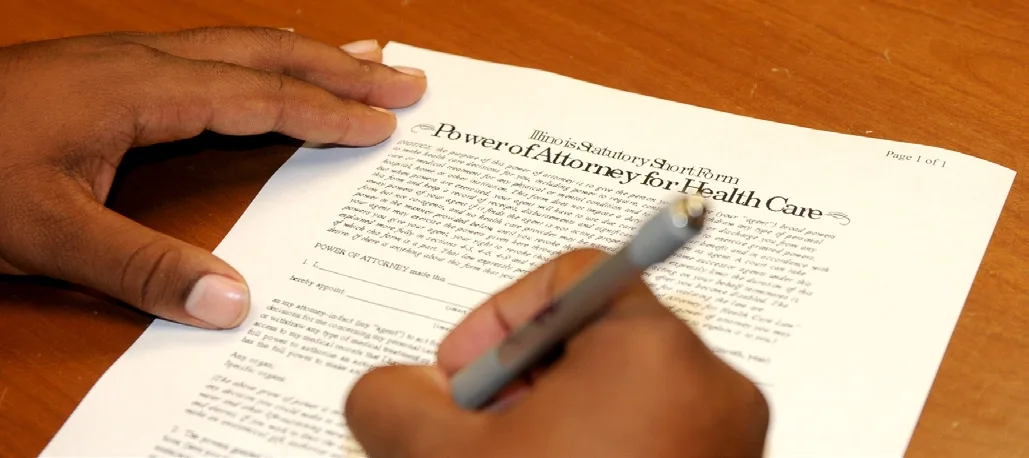
Someday, most families face the same hard moment. A parent, a spouse or a partner cannot manage their own affairs for a while. An illness, an injury or a long absence can cause it. A power of attorney is the plain tool that keeps bills paid and decisions made while that person steps back.
According to Wikipedia, a power of attorney, or POA, is a written authorization to act on the behalf of another. It covers private affairs, business, or some other legal matter. The person who grants it is the principal, also called the grantor or donor. The person who acts is the agent, known in some places as the attorney-in-fact power of attorney. The word attorney here does not mean a lawyer.
What an Agent Is Allowed to Do
An agent does not need any legal training. Wikipedia notes that an attorney-in-fact may be a layperson. Such an agent may not engage in acts that would count as the unauthorized practice of law. The role carries strict duties though. Under the Uniform Power of Attorney Act, an agent is a fiduciary for the principal. The law demands complete honesty and loyalty. The agent serves the principal, not the rest of the family.
The power can also be abused. Wikipedia warns that it can be misused to steal the assets of a person who is weak or absent. That pattern shows up in elder abuse. Families should pick an agent with care and stay involved after signing. Trust matters more than polish here. We covered a connected angle in How Derivative Shareholder Lawsuits Work: Demand, Futility and Who Actually Recovers.
The Main Types Families Use
- A special, or limited, power of attorney covers one specified act or type of act.
- A general power of attorney lets the agent make all personal and business decisions.
- A temporary power of attorney runs for a limited time frame.
- A durable power of attorney survives incapacity. Its power continues until the grantor dies or revokes it.
- A springing power takes effect only after incapacity or another definite future event.
Health care needs special mention. In some places, a durable health care power of attorney gives an agent lasting power to make medical choices, Wikipedia explains. It is often called a health care proxy. A living will is a separate paper. It states the medical wishes of a person but does not appoint anyone to decide for them.
What Makes a Power of Attorney Valid
The grantor must have the mental capacity to sign. Wikipedia is clear on this point. Someone who is already incapacitated cannot sign a valid power. Without a durable document in place, a family may need a court to act. The court can impose a conservatorship or a guardianship, which is slower and far more stressful. For related coverage, see Corporate Transparency Act Reporting Explained: Who Must File Beneficial Ownership Information.
At a minimum, the paper must be signed and dated by the principal. Some jurisdictions also require a witness, a notary, or both. Oral powers hold up in some places. Even so, hospitals, banks and the Internal Revenue Service usually demand writing before they honor one. There is also the equal dignity rule. If the act itself requires a written contract, such as a home sale, the authorization must be in writing too.
Changing or Ending a Power
A power of attorney is not forever. As long as the grantor is mentally competent, it can be revoked or changed. Wikipedia adds one warning. Say the principal revokes the power but never tells third parties. If those parties reasonably rely on the old document, the principal might still be bound by the acts of the agent. Tell every bank and office that holds a copy when you cancel one.
Conclusion
A power of attorney is simple in concept and powerful in effect. It lets a trusted person pay your bills, manage your money or speak to doctors when you cannot. Choose an agent you trust, match the type to the need, and sign it while you are clearly able. Families who prepare early spare themselves court dates later.
This article is general education, not legal advice. Rules differ by state, so confirm details with a licensed attorney in your area.