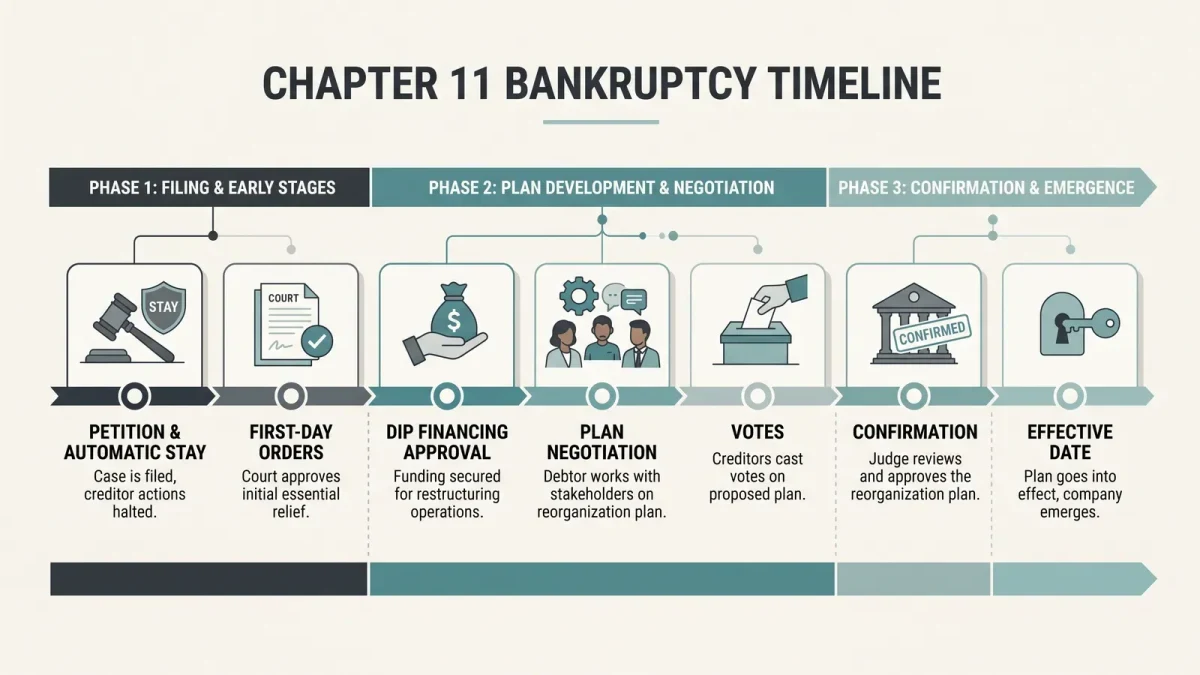
Chapter 11 of the Bankruptcy Code is the reorganization chapter: the debtor keeps operating as a fiduciary of the estate, an automatic stay freezes nearly all collection efforts the moment the petition is filed, and the business emerges under a court-confirmed plan that restructures debts, or is sold as a going concern through a plan or a Section 363 sale. The three mechanisms that define the chapter — the automatic stay, debtor-in-possession (DIP) financing with its superpriority, and the plan-confirmation bargain of cramdown — exist to convert a rush of creditors into a single negotiated proceeding.
USA Post publishes information about restructuring law, not legal advice.
What does the automatic stay accomplish?
Section 362's stay stops collections, foreclosures, lawsuits, setoffs and enforcement of judgments against the debtor and the estate, from the petition forward and worldwide in practical effect. It gives breathing room and forces creditors into the case, where priorities are set by statute: secured claims to the value of collateral, priority wages and taxes, then general unsecureds. Creditors can seek relief from the stay for cause, including lack of adequate protection of collateral, and lenders routinely negotiate cash-collateral or DIP orders within the first weeks that spell out their protections. Violating the stay — repossessing a truck after notice of the filing, for instance — is void and sanctionable.
How does DIP financing work?
Post-petition credit is the fuel of reorganization, and the Code makes it attractive: under Section 364, court-approved DIP loans can carry superpriority over existing claims, liens on unencumbered assets, and — the contested feature — priming liens on encumbered assets over objections if existing lenders are adequately protected. DIP facilities routinely include roll-ups of prepetition debt into the superpriority facility, criticized as lender leverage but routinely approved; milestones that force sales or plan timelines by dates certain; and professional-fee carve-outs protecting the estate's advisors. The prepackaged and prearranged variants skip most of the drama: where the debtor negotiates the plan with creditors before filing, confirmation can come in weeks — the technique behind most of the large 2020-2025 cases, and the reason the median large Chapter 11 has compressed dramatically. The Subchapter V stream for small businesses (debt caps adjusted to $7.5 million) offers a cheaper track with no creditors' committee by default and a 90-day plan window absent good cause.
Who runs the company, and who watches?
The debtor remains in possession as a fiduciary of the estate; trustees are appointed only for cause like fraud or gross mismanagement. Oversight comes from the U.S. trustee (a Justice Department officer who appoints the official committee of unsecured creditors), examiners in large cases, and the court. Directors' duties shift: after insolvency, Delaware authority directs them toward maximizing the estate for the creditors as a class — the Credit Lyonnais zone — and D&O insurance, indemnification and the customary examination of prepetition conduct (fraudulent transfers, preference exposure, fiduciary breaches) are standard parts of every case's settlement dynamics.
What is avoidance litigation?
The estate's lawsuits to claw back value: preferences (Section 547) void transfers to creditors within 90 days before filing — a year for insiders — that improved their position beyond what bankruptcy distribution would give, subject to defenses like ordinary course and new value; fraudulent transfers (Section 548) unwind transfers for less than reasonably equivalent value or with intent to hinder creditors, reaching back two years and further under state law; and post-petition transfers are void under Section 549. Every trade creditor that got paid in the quarter before a customer's filing should know the preference-defense playbook, and every borrower that moved assets away from creditors should know the estate's trustee can reach them.
How does a plan get confirmed?
- Classify claims and get a plan sponsored — by the debtor, creditors, or a buyer — with disclosure statement approved for solicitation.
- Collect votes: a class accepts with two-thirds in amount and a majority in number of voting creditors.
- Meet Section 1129: feasibility, best-interests of creditors (each gets at least liquidation value), fair-and-equitable treatment for dissenting classes.
- Cram down dissenting classes where the absolute-priority rule is honored and at least one impaired class has accepted.
- Exit: plan effective date, discharge of prepetition claims, reorganized balance sheet — or, in the sale variant, a credit-bid auction under Section 363 with proceeds distributed by priority.
What should an owner do before the filing decision?
Get restructuring counsel early enough to plan — the 90-day and one-year look-back windows make sloppy prepetition payments the enemy. Keep trust-fund taxes (withholding, sales) untouched: those are personal liabilities of responsible officers. Consider out-of-court alternatives first — forbearances, amend-and-extend, exchange offers — because Chapter 11 costs, in professional fees, routinely consume double-digit percentages of small estates. And if filing is right, negotiate the DIP and the plan skeleton before the petition: the cases that work are settled before they begin.