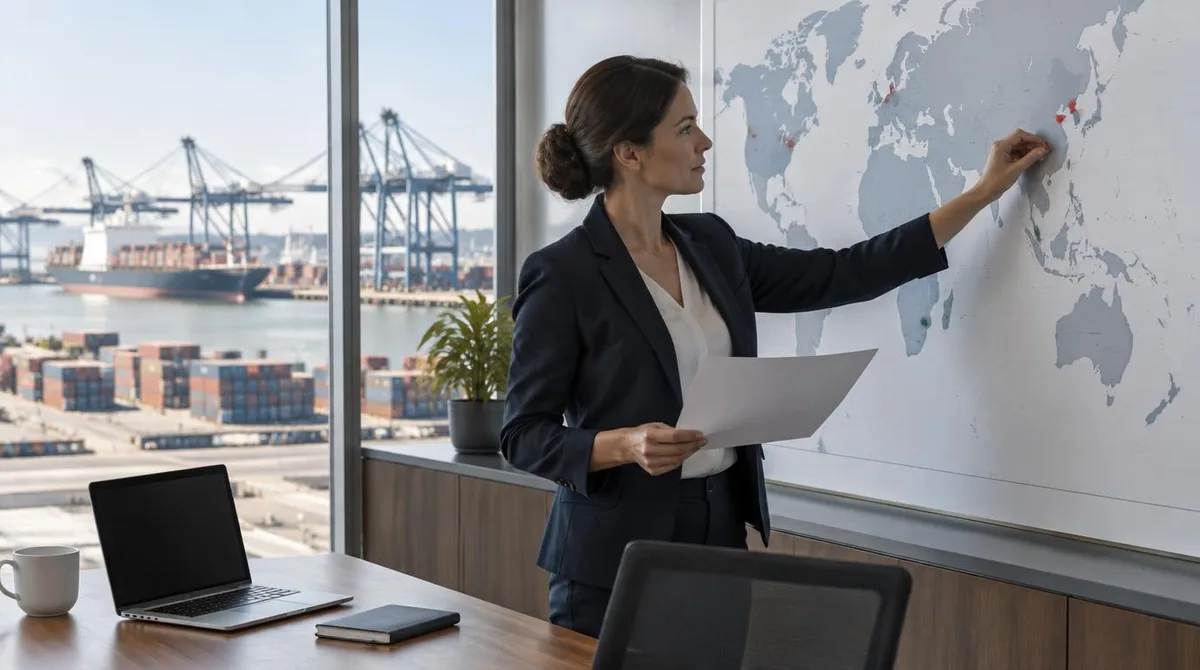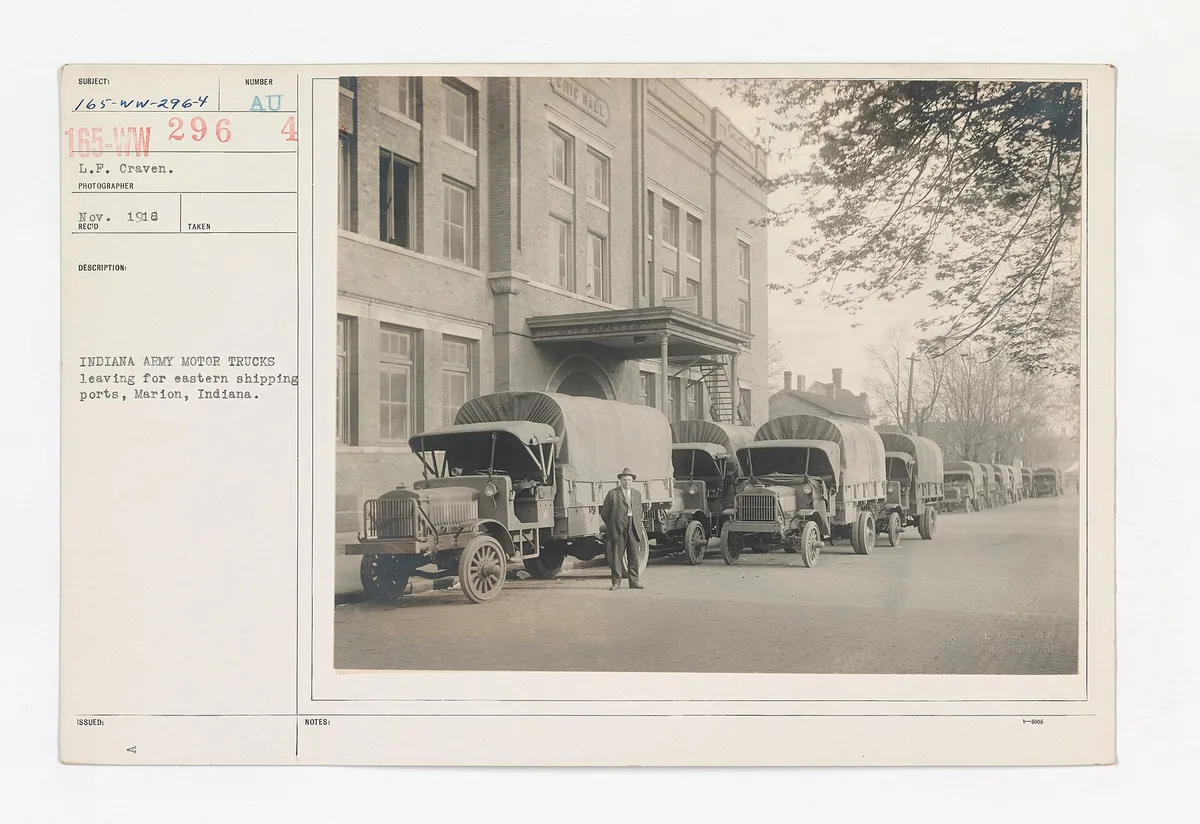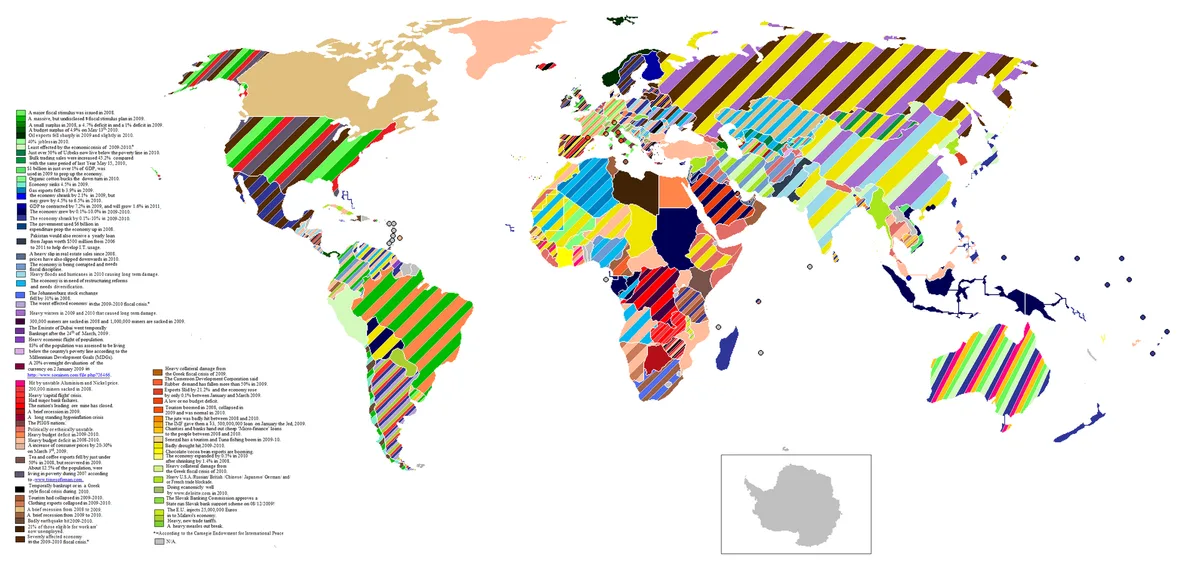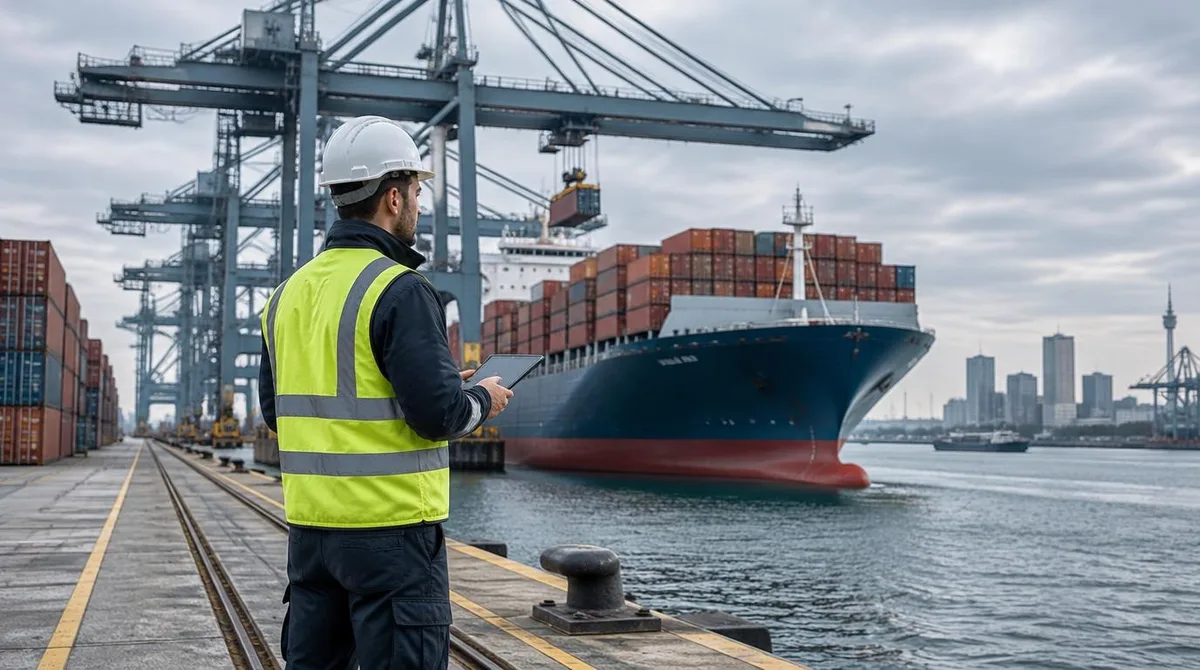
A port is a maritime facility with wharves or loading areas where ships take on and discharge cargo and passengers. It is the hinge of world commerce. According to Wikipedia's overview of ports, about 70% of global merchandise trade by value passes through one, which is why understanding how ports work means understanding how goods actually move from factory to shelf.
The work at a modern port is mostly hidden from public view. Visitors see gantry cranes and stacked containers; the real choreography happens in the terminal operating plan, the customs paperwork and the handoffs between ship, yard and truck. Each move is scheduled, and each schedule depends on the one before it.
This explainer walks through that sequence: what a port physically is, how a container terminal handles a ship call, where customs fits in, and what the whole system costs in environmental and climate terms. Readers who want the rules that govern the goods themselves can start with our trade coverage.
What exactly is a port?
Definitions agree on the essentials. A port is a place on a waterway with facilities for loading and unloading ships, often attached to a city built around that work. Most sit on a sea coast or an estuary, but not all. Wikipedia notes that ports can sit far inland — Hamburg, Manchester and Duluth are its examples — reaching the sea through rivers or canals.
Ports also vary enormously in scale. Wikipedia identifies Busan in Korea as the world's sixth-largest container port, and records that the greatest growth in port development today is in Asia, home to some of the largest and busiest facilities such as Singapore and the Chinese ports of Shanghai and Ningbo-Zhoushan. At the other end of the range, countless smaller ports serve only local tourism or fishing. Function, not size, is the defining feature: a sheltered place where cargo and people cross between land and water.
How does a container terminal handle a ship?
A container ship's visit, called a call, follows a repeating sequence. Before arrival, the carrier files its manifest and the terminal plans the stow: which containers come off first, which go on, and where each one sits in the yard. Berth space, crane time and labor shifts are booked against that plan, because a ship that waits at anchor costs money by the hour. Readers following this should also see Currency Exchange for Business: What First-Time Importers Pay Beyond the Sticker Rate.
Once berthed, the gantry cranes lift containers off the vessel one at a time, each locked to a spreader bar and lowered onto a terminal tractor or an automated guided vehicle. The box travels to a slot in the yard, where stacking cranes place it in a position recorded in the terminal's system. Export boxes make the same journey in reverse, from truck to yard to ship, sequenced so the vessel's stability and the next port's unloading order are both preserved.
The choreography is the point. A single misplaced container can force re-stows that push a ship past its departure window. That is why terminal operators describe their work less as loading than as scheduling — a continuous reshuffle of metal boxes, each with a destination, a cut-off time and a customs status.
Where does customs fit into port operations?
Customs is the legal gate inside the physical one. Cargo cannot simply leave the terminal and enter commerce; it must be entered with the customs authority, its duties assessed and its admissibility confirmed. The paperwork usually begins before the ship arrives, when the entry is filed against the arriving manifest.
For importers, the terminal is where several compliance obligations become concrete. Goods must be declared under the correct classification and origin claims, and the entry process runs from arrival through to liquidation — the final settlement of the duty bill. Our guide to customs bonds and the import entry process follows that sequence in detail. Screening for restricted parties, forced-labor concerns and other admissibility questions also happens at this stage, before the box is released. We covered a connected angle in Customs Bonds and the Import Entry Process: From Arrival to Liquidation.
What this means in practice: the port is not just a loading dock. It is the point where trade rules attach to physical goods, and where a documentation error turns into a delayed container rather than an abstract filing problem.
Why do ports concentrate so much economic activity?
The concentration is historical as much as logistical. Wherever ancient civilizations traded by sea, Wikipedia notes, they tended to develop ports; one of the world's oldest known artificial harbors sits at Wadi al-Jarf on the Red Sea. Rome's port at Ostia, the Greek port of Piraeus and the medieval maritime republics of Italy all grew rich on the same logic: whoever controls the transfer point between sea and land controls a share of everything passing through it.
That logic still holds. Ports are typically dense settlements supplying the labor that processes and handles goods, and port cities have historically absorbed waves of immigrants and soldiers passing through as ports of entry. The result is a distinctive economic geography — warehouses, trucking, brokerage, repair and finance clustered within a few miles of the quayside — that no inland distribution center fully replicates.
What are the environmental costs of port operations?
The same intensity that makes ports economically central makes them environmentally consequential. Wikipedia identifies their main local impacts as effects on water quality from dredging, spills and other pollution, along with sound, light and air-quality effects on surrounding communities. Dredging, which keeps channels deep enough for large vessels, is a permanent disturbance to the waterway itself.
Climate change cuts in both directions. Wikipedia describes port infrastructure as extremely vulnerable to sea-level rise and coastal flooding, and notes that ports worldwide have begun integrating climate adaptation into construction and improving coastal management practices. For terminal operators, that is a capital-planning problem as much as an environmental one: berths, yards and access roads sit at the exact elevation where rising water does its damage.
Our analysis: what the port system tells a business reader
Three takeaways follow from the record. First, ports are chokepoints by design, not accident — the 70% figure for merchandise trade by value reflects how much of world commerce must funnel through a limited number of transfer facilities. Second, the compliance burden lands at the port, which is why importers who understand the entry process before cargo arrives move goods faster than those who learn at the terminal gate.
Third, the system's resilience depends on things a single shipper cannot control: berth availability, crane capacity, dredging schedules and flood defenses. Firms that treat port operations as an external fact of nature tend to be surprised by congestion; firms that treat them as infrastructure with known constraints plan around it. The evidence for how ports work is public and well documented — the choreography rewards a closer look.