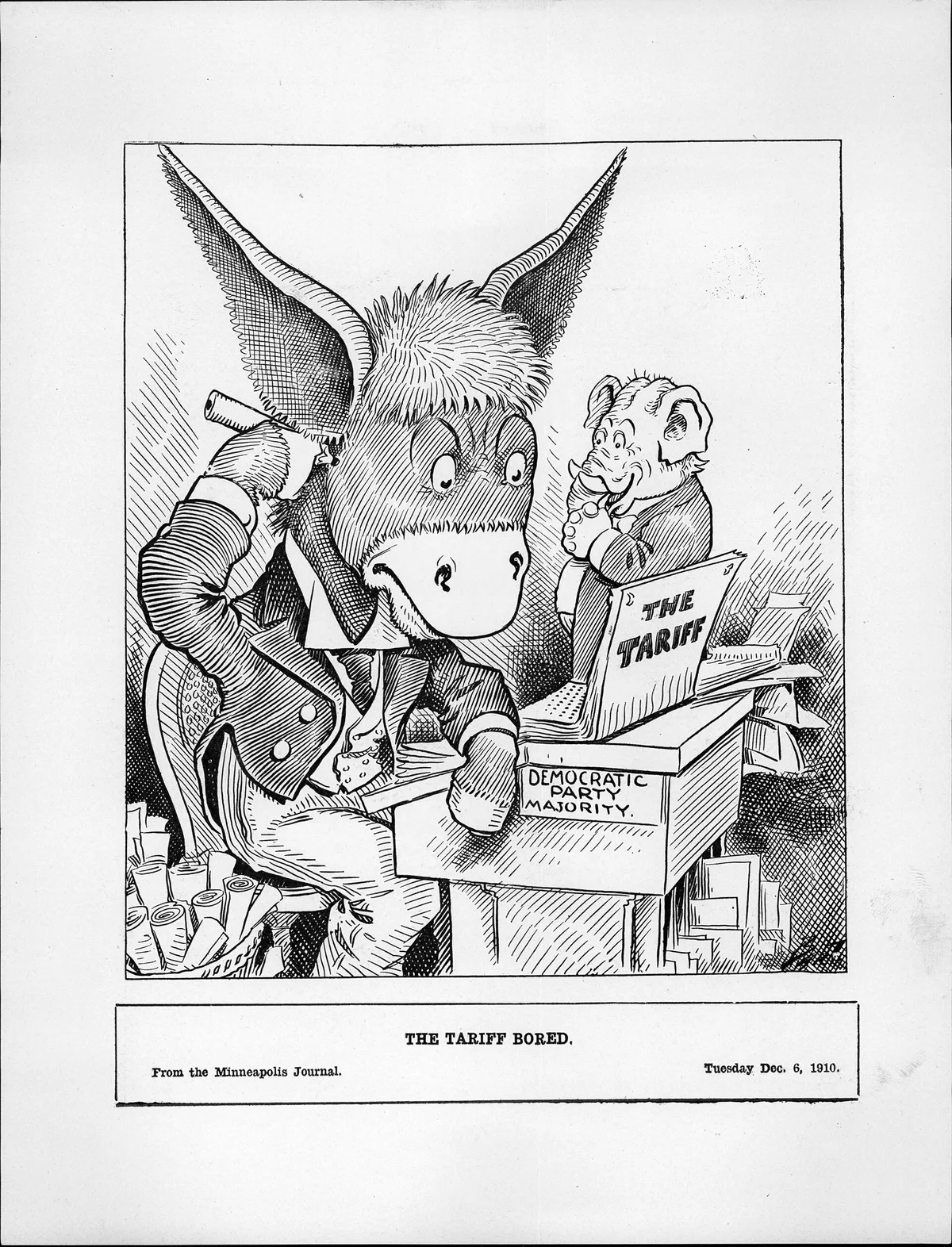
A tariff is a tax a government places on goods crossing its border. In the United States, the importer of record — the company bringing the goods in — pays it to U.S. Customs and Border Protection, typically within ten days of the goods clearing customs. The foreign seller does not write the check. That single fact shapes everything that happens next, from the port to the checkout line.
What happens next is a question of cost accounting. The importer can absorb the duty, pass it to customers, split the difference, or stop importing the product altogether. Which path wins depends on margins, competition, and whether a domestic alternative exists. Research on recent tariff episodes suggests the answer is usually some form of pass-through: according to BBC News, a Goldman Sachs study from October 2025 estimated that roughly 55% of tariff charges were passed on to US consumers.
This piece follows that money. It traces how a duty is calculated at the border, how it stacks with other duties, and where in the chain a shopper actually encounters it. Readers who want the procedural machinery behind one major tariff program can see how Section 301 investigations turn into import duties, and the broader trade coverage on this site tracks the compliance side of the same pipeline. For related coverage, see Rules of Origin in Free Trade Agreements: How Products Qualify for Preferential Rates.
How does a tariff get calculated at the border?
The calculation starts with classification. Every imported product carries a code from the Harmonized Tariff Schedule, and that code — not the product's brand or category label — determines the duty rate. The rate itself comes in three basic forms.
- Ad valorem — a percentage of the good's value. This is the most common form for manufactured goods. A 2.5% rate on a $30,000 imported car adds $750.
- Specific — a fixed fee per unit, weight, or volume, regardless of price. The United States charges 51 cents on every imported wristwatch, whether that watch costs $40 or $5,000.
- Compound — both at once. Certain imported footwear faces 5% of value plus $1 per pair.
According to GovFacts, the taxable value under an ad valorem duty often includes not just the product's price but also freight and insurance to the destination port — a method called Cost-Insurance-Freight. That detail matters for importers: a currency swing or a freight-rate spike can change the duty owed on an identical shipment from one month to the next.
Why is the duty a stack, not a single rate?
The headline number a shopper sees in the news is rarely the number an importer pays. Duties in the United States are additive: a base rate from the tariff schedule sits at the bottom, and separate measures — Section 301 actions, Section 232 metals duties, and other Chapter 99 programs — layer on top when each applies to the product.
The stacking can be substantial. A worked example from a tariff-tracking dataset shows Chinese steel rebar facing a base rate of zero, plus a 25% Section 301 duty, plus a 50% Section 232 duty — an effective 75% rate. Apparel tells a quieter version of the same story: $10,000 of Chinese woven apparel carries a 5.5% base duty of $550 plus a 25% Section 301 duty of $2,500, for $3,050 total. On top of the duty layers sit the merchandise processing fee and, for ocean shipments, the harbor maintenance fee.
Each layer also carries its own legal life. One 10% across-the-board surcharge, imposed under Section 122 of the Trade Act of 1974, expired by operation of law on July 24, 2026, after reaching the statute's 150-day maximum. Goods entered on or after that date owe no surcharge; liability turned on the entry date. Importers managing these layers at entry can see how the process works in the site's guide to customs bonds and the import entry process.
Who actually pays the tariff?
The statutory payer is the importer. The economic payer is whoever ends up absorbing the cost, and the evidence on recent episodes points in a consistent direction.
Companies have been candid about their plans. According to BBC News, major retailers including Target, Walmart, and Adidas said they would pass tariff costs on to US customers, and prices rose for toys, appliances, furniture, and certain foodstuffs. Goods made in the United States using imported components also became more expensive — a reminder that a tariff on an input taxes every product built from it, domestic or not.
Pass-through is rarely instant or complete. An importer with a fixed-price contract may eat the duty for months. One with thin margins and strong competition may have no room to raise prices at all, and instead squeeze suppliers or exit the category. The 55% pass-through estimate from the Goldman Sachs study implies the burden was shared, not simply forwarded. A Federal Reserve study, also cited by BBC News, found in April that the 2025 tariffs had contributed to a surge in inflation that year.
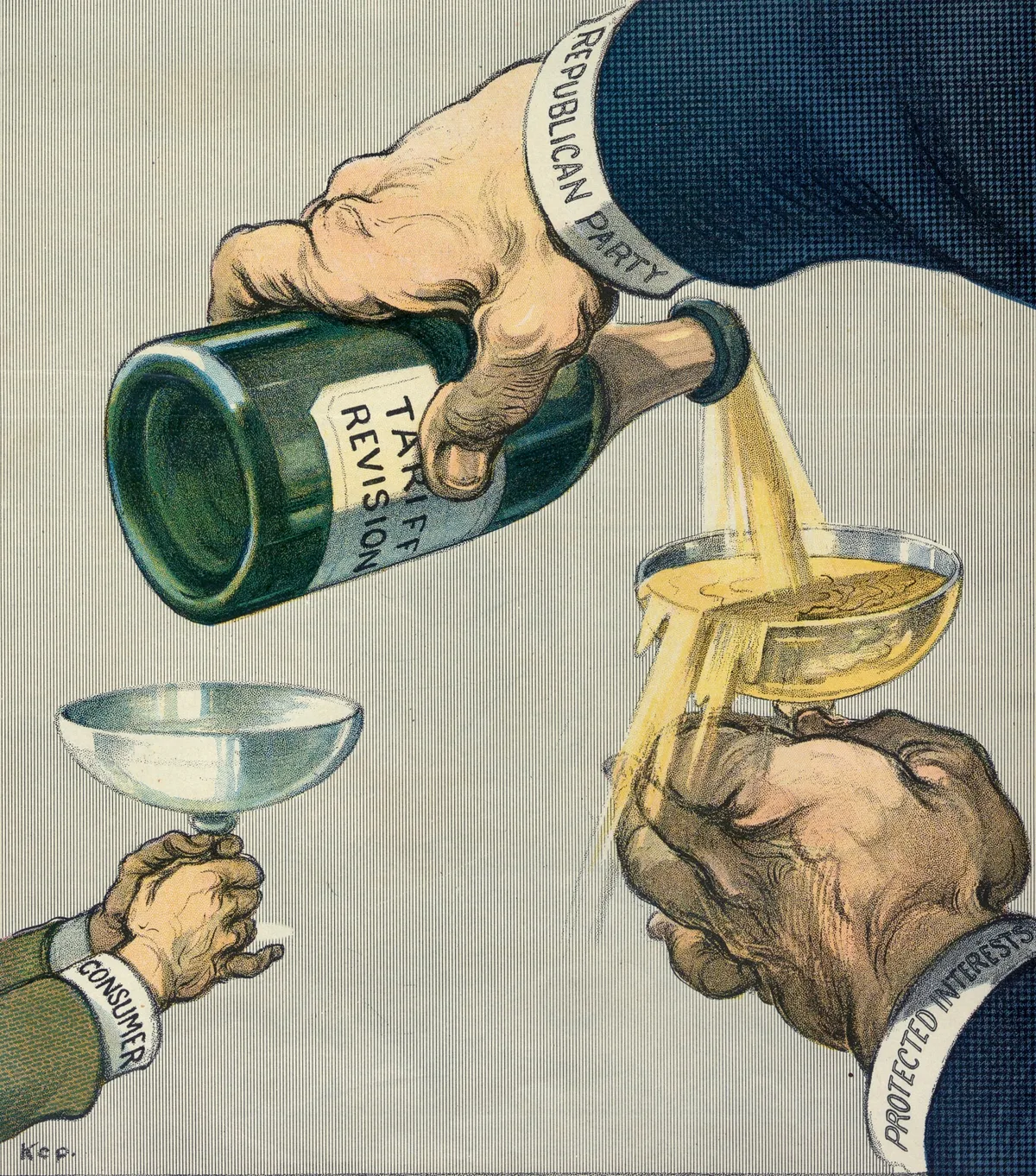
Think of a tariff as a wedge between what the foreign seller receives and what the American buyer pays. The seller still gets its price; the wedge lands somewhere in between, and the fight over where is what consumers experience as price changes.
What this means for the checkout line
For a shopper, the tariff arrives disguised. Nobody pays a line item called "duty" at a register. Instead the duty shows up as a higher shelf price, a smaller package at the same price, a cheaper substitute material, or a product quietly dropped from the assortment. Economists call the last two responses to the same tax; consumers experience them as change without explanation.
Three practical observations follow from the mechanics.
- Origin determines exposure. The same product can carry very different duty burdens depending on where it was made, which is why rules of origin disputes are worth the paperwork. The site's explainer on rules of origin in free trade agreements covers how products qualify for preferential rates.
- Not every price change is a tariff. Freight, currency, and commodity costs move prices too. A tariff shows up in the landed-cost math of the importer, not automatically in the sticker.
- The stack changes. Programs expire, get replaced, and get litigated. A duty that applied at one entry date may not apply at the next.
Our analysis of the sourcing record is that the honest summary is directional, not precise: tariffs raise the cost of importing, importers pass along a substantial share of that cost over time, and the share varies by product and market. Anyone who promises an exact percentage for a specific shopping basket is estimating, not reporting.
Where the legal fights leave prices
Tariff policy is also a live legal question, and litigation feeds back into costs. In February 2026, the Supreme Court held that the president had exceeded his authority in imposing country-specific tariffs under the International Emergency Economic Powers Act without congressional approval, a ruling that covered the early-2025 tariffs on Mexico, Canada, and China as well as the April 2025 "Liberation Day" tariffs of up to 50% for dozens of countries. According to a court filing cited by BBC News, the affected tariffs represent roughly 60% of the roughly $166 billion collected under the policy; around $29 billion in potential refunds were still under review, and a further $1.6 billion remained unpaid pending importer banking details.
The administration turned to other statutory tools, including a Section 301 action imposing 10% to 12.5% duties on goods from the top 60 US trade partners, which 25 states have challenged in litigation. For importers, the practical effect is a moving compliance target: rate changes, expirations, and refund questions all turn on entry dates and product codes. The site's coverage of the de minimis rule and its end shows the same pattern at the low-value end of the market. We covered a connected angle in Section 301 Tariffs on China Explained: How USTR Investigations Turn Into Import Duties.
What the evidence establishes is this: tariffs are paid at the border by importers, a large share of that cost reaches consumers through higher prices over time, and the exact burden in any category depends on classification, origin, and the stack of programs in force. What remains unknown, in any given month, is how much of a new duty has already reached the shelf — and how much is still sitting in an importer's margin, waiting.