Antidumping and countervailing duties are trade remedies imposed on imports sold in the United States at less than fair value (dumping) or benefiting from foreign government subsidies (countervailable subsidies). The Department of Commerce investigates the existence and margin of dumping or subsidization; the U.S. International Trade Commission decides material injury to the domestic industry. Both must be found for duties to attach, and the resulting rates — often double-digit to triple-digit percentages — are set by the investigation's findings and then adjusted in annual administrative reviews.
USA Post publishes information about trade-remedy law, not legal advice. Importers and petitioners should consult trade counsel on specific proceedings.
How does an investigation proceed?
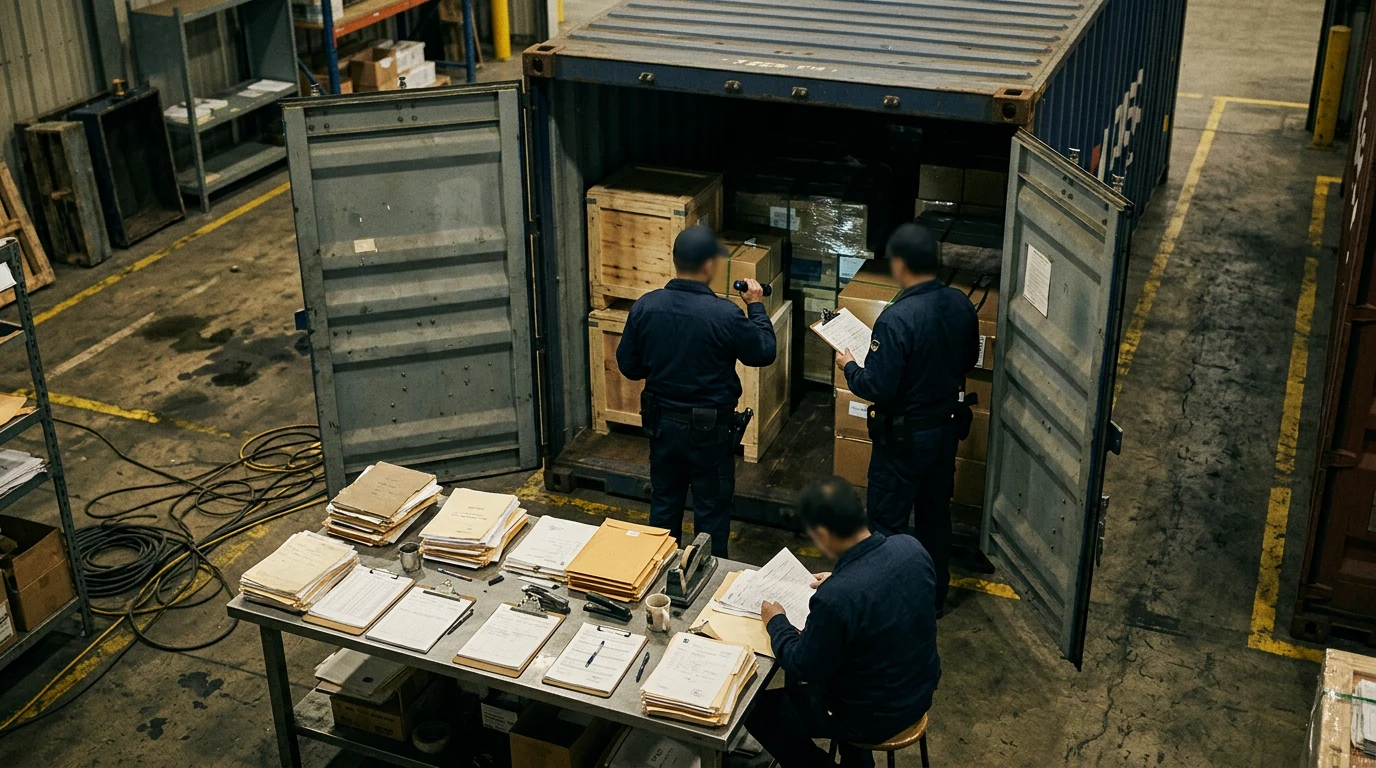
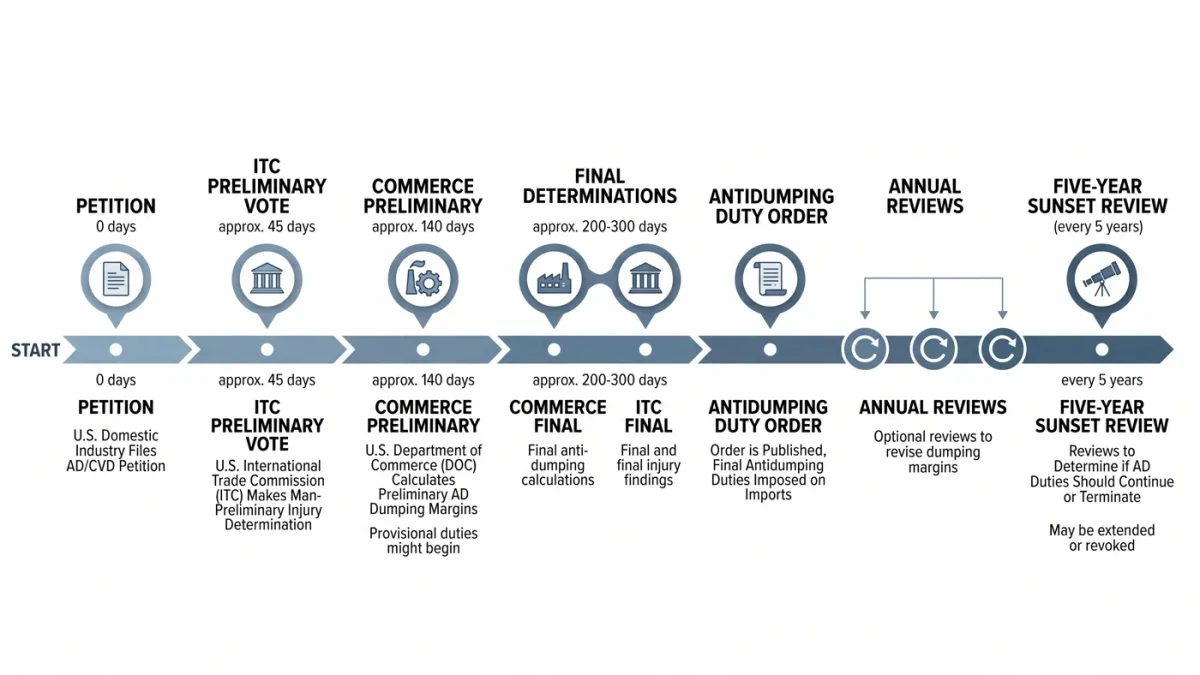
A domestic industry files a petition with both agencies; Commerce determines within 20 days whether it is properly supported, and the ITC makes a preliminary injury finding within 45 days. Commerce's preliminary dumping or subsidy determination comes around day 100 (subsidies) or 140 (dumping), followed by verification of the respondents' data — on-site audits of the mandatory respondents' books — and a final determination; the ITC's final injury vote follows within 45 days. If affirmative, Commerce issues an AD/CVD order, and importers must deposit estimated duties at the announced rates at entry. The whole run takes roughly a year; provisional measures in the form of cash deposits apply from the preliminary determination.
How are dumping margins calculated?
By comparing export price to normal value — the price in the producer's home market or a constructed cost-plus figure — with a statutory toolbox of adjustments. Where the respondent cooperates and is selected as mandatory (Commerce usually investigates two to four because of resource limits), it receives its own rate from verified data; cooperating non-respondents get a weighted average of the mandatory rates; everyone else receives the adverse "all-others" country rate, which uses adverse facts available when a foreign government or company impeded the investigation — a frequent feature of non-market-economy proceedings, where surrogate-country data replaces home-market prices. Rates vary wildly by respondent: in the same order, cooperating firms may face 5 percent while the all-others rate exceeds 200 percent — the incentive structure that drives participation.
What happens after the order issues?
The order is not the end but the beginning of a lifecycle. Annual administrative reviews (on request) recalculate each respondent's actual duty liability for the review period — final liability is set at review, not entry, so importers' cash deposits are estimates that true up years later, with interest. Sunset reviews every five years determine whether revoking the order would likely lead to continuation of dumping or subsidies. New shipper reviews give entrants without prior shipments their own rates. And circumvention inquiries police routing — products assembled in third countries from components of the covered country can be found circumventing the order, as can minor modifications.
What does this mean for importers specifically?
Three obligations dominate. First, duty liability is retroactively trued up: an importer paying a 20 percent deposit at entry may owe 80 percent after review, plus interest — the uncertainty importers must price, and the reason AD/CVD exposure is measured at the rate, not the deposit. Second, evasion is a crime: transshipment through third countries to disguise origin is prosecuted under EAPA (Enforce and Protect Act) findings and criminal customs-fraud statutes, with retroactive duties, penalties and referrals. Third, importers can participate: as parties in interest, they may request reviews, argue separate rates, and — in the era of first-sale pricing strategies — structure transactions to lower the dutiable value lawfully. Importers who ignore proceedings affecting their products routinely discover five-year liabilities compounded by interest.
How should domestic producers and importers each respond?
- Producers considering a petition: assemble the industry-support data (25 percent of domestic production threshold, 50 percent of those expressing a view) and price data early; the agencies' strict timelines reward prepared petitions.
- Importers sourcing from covered countries: calculate exposure at the current cash-deposit rate and the potential review rate, not just the order rate.
- Respondents abroad: cooperate fully and promptly — the all-others and adverse-facts rates dwarf mandatory-respondent rates, and response quality is the single largest rate driver.
- Everyone: monitor the ITC's injury scope — orders cover products within the defined scope language, and scope rulings determine whether new products are caught.
- Calendar the lifecycle: reviews, sunsets and scope rulings each offer attack and defense points years after the order.
Is AD/CVD activity rising?
Yes, structurally. Petitions averaged 50-70 per year through 2020, then jumped — 2021-2025 saw record or near-record filings, driven by solar components, aluminum and steel derivatives, shrimp, and a wave of Southeast Asia solar circumvention findings (the 2023 Commerce determination on Malaysian, Cambodian, Thai and Vietnamese cells) and the 2024-2025 follow-on investigations with final determinations into 2025-2026. The 2025 tariff environment layered new sectoral measures on top, but AD/CVD remains the industry-specific remedy domestic producers use against targeted import competition — and the docket shows they are using it more than ever.