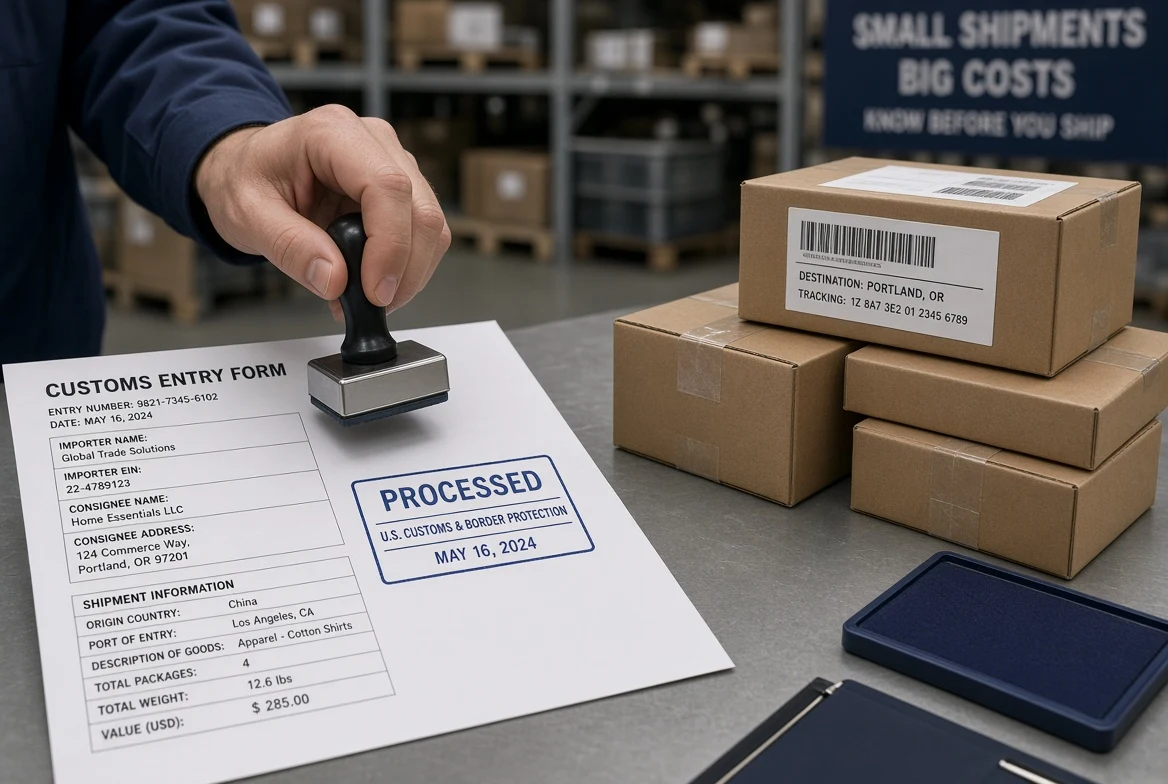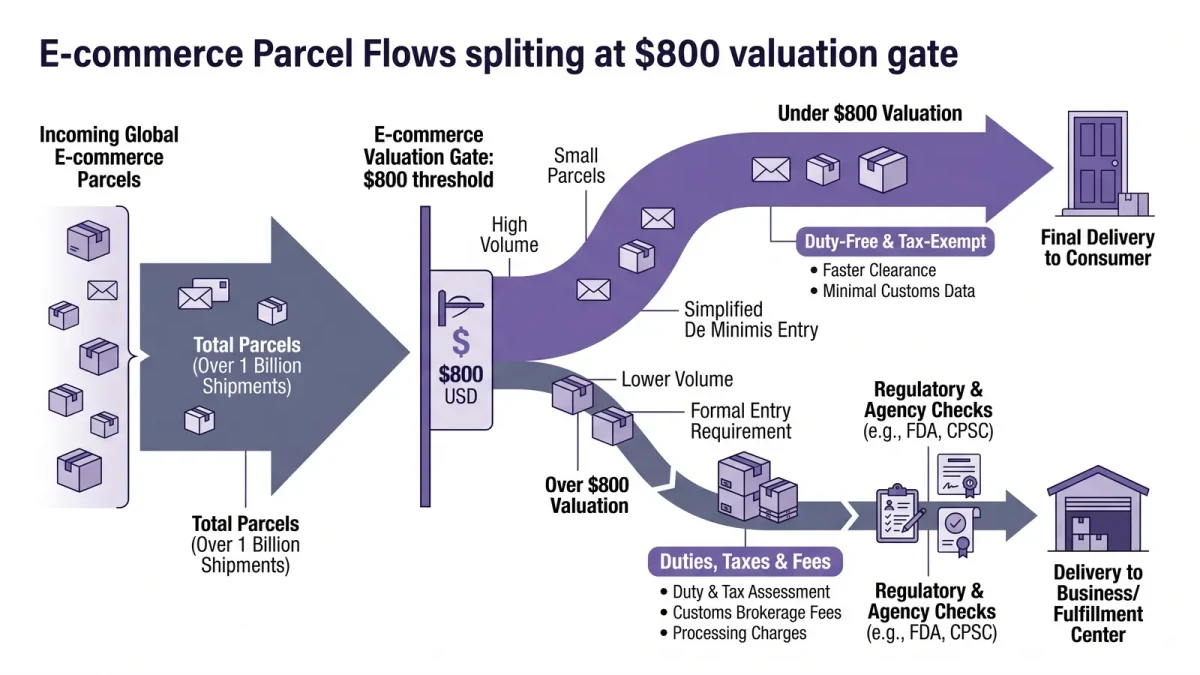
Section 321 of the Tariff Act, the de minimis rule, allows shipments of goods imported by one person on one day whose aggregate fair retail value does not exceed $800 to enter the United States free of duty and tax and, critically, free of formal entry — no merchandise processing fee, no broker clearance of the ordinary kind, minimal data. The threshold, raised from $200 to $800 by the Trade Facilitation and Trade Enforcement Act of 2016, became the backbone of cross-border direct-to-consumer e-commerce: by 2023-2025, over a billion de minimis shipments entered annually, the majority originating in China, moving everything from fast fashion to electronics without tariffs that formal entries paid.
USA Post publishes information about customs regulation, not legal advice. Shippers should confirm current rules — this area changed repeatedly through 2025-2026.
How does the rule work mechanically?
Each shipment qualifies individually: one consignee, one day, aggregate value under $800, admissible goods, not subject to partner-government-agency requirements that demand entry, and not part of a split order designed to evade the cap. Carriers transmit minimal advance data through CBP's Type 86 entry test or informal entry processes. What the rule never exempted: merchandise subject to Section 301 tariffs technically applies — de minimis goods from China are excluded from those duties by the mechanics of the regime, which is precisely the competitive distortion critics attacked — nor FDA-, CPSC- or USDA-regulated goods, which may require entry regardless of value; and intellectual-property seizures apply fully, with de minimis channels becoming a major vector for counterfeit goods that CBP's 2023-2024 seizures statistics tracked.
Why did the rule become controversial?
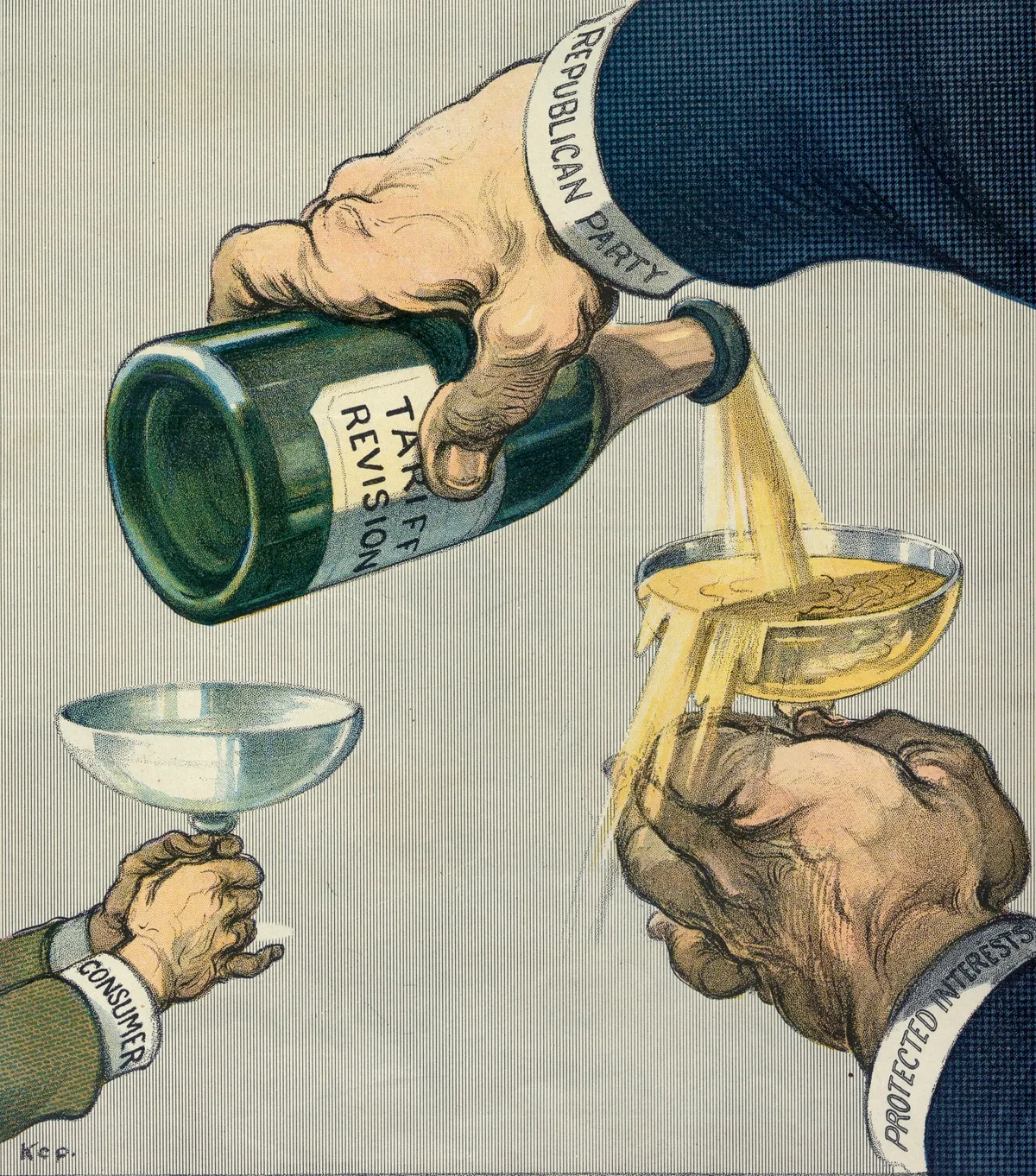
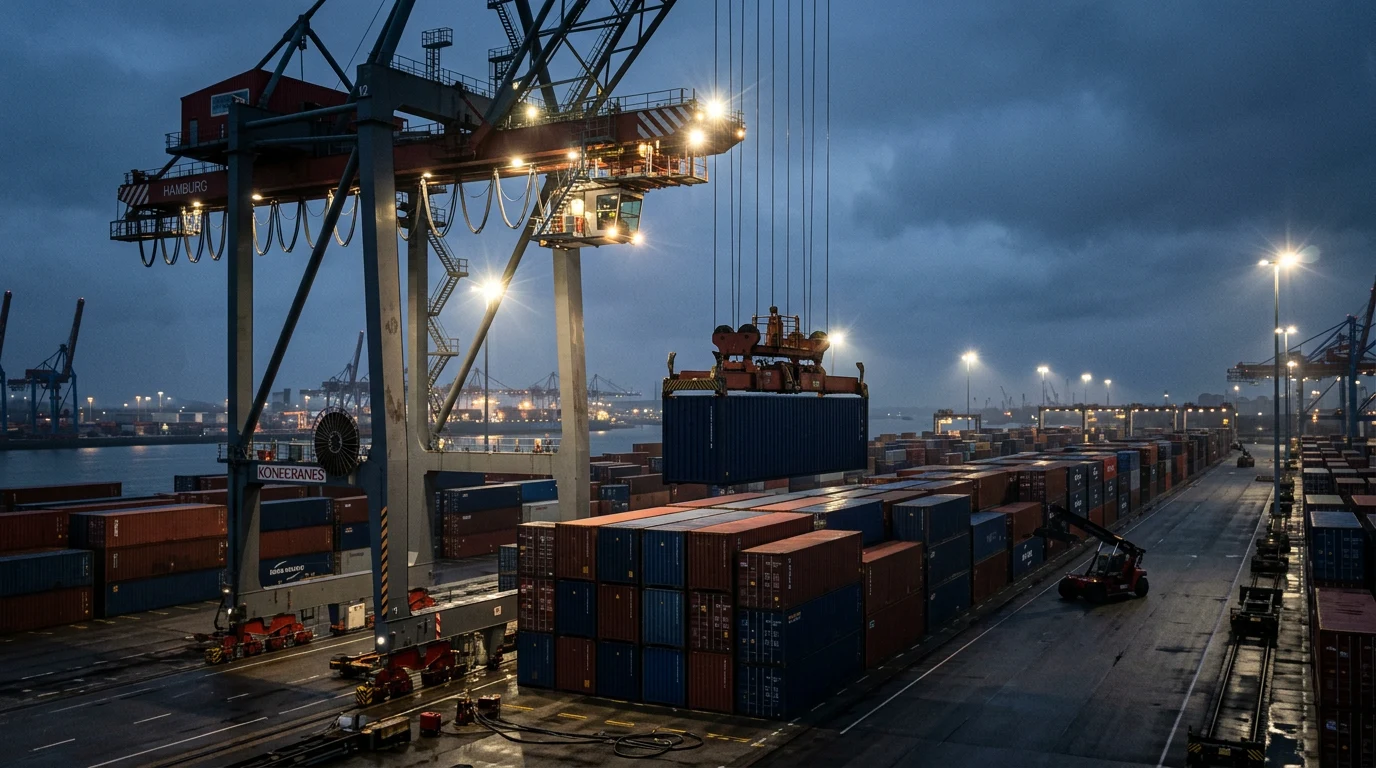
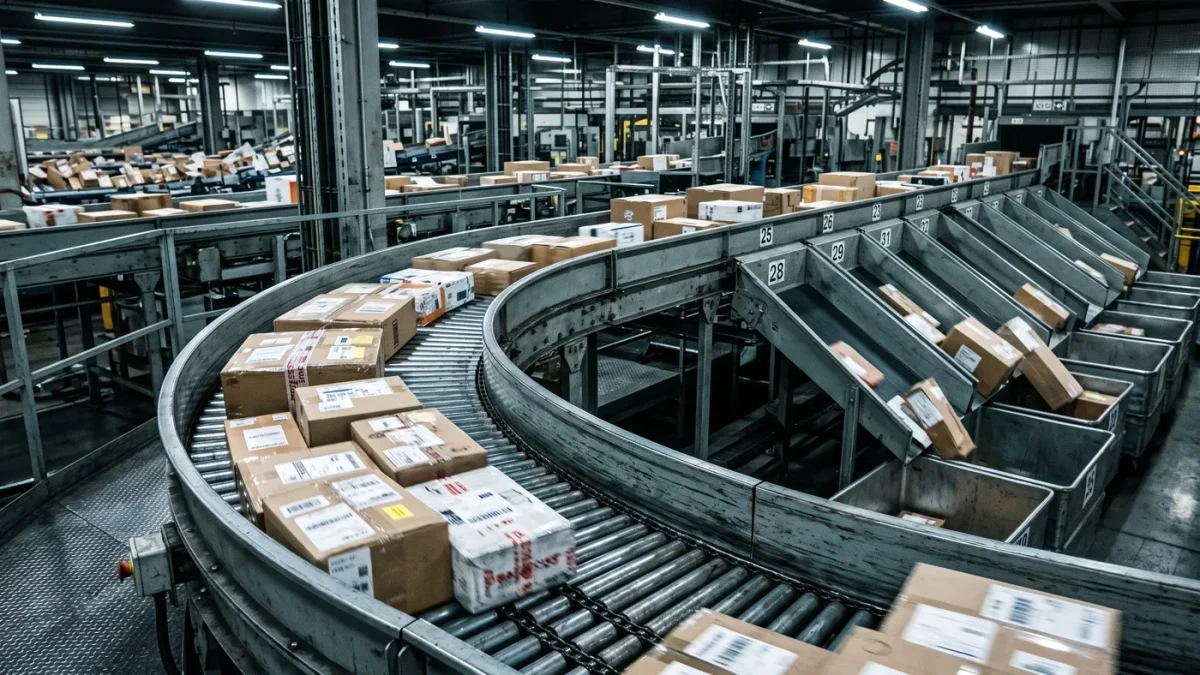
Scale and asymmetry. A billion-plus shipments a year overwhelmed port screening — CBP officers cannot interdict counterfeits, fentanyl precursors, and unsafe products in a volume stream designed for minimal touch. Domestic retailers and manufacturers argued the $800 channel gave foreign e-commerce a structural tariff advantage — the same Chinese-made dress paid 30-percent-plus duties entering a container for a U.S. retailer and nothing entering parcel-by-parcel for a platform. Labor and trade hawks added the data dimension: the channel's minimal visibility into supply chains undermined forced-labor enforcement — UFLPA detentions attach to formal entries, while de minimis flows largely bypassed the screening that regime imposes.
What changed in 2024-2026?
A sequence of restrictions. The Biden administration's September 2024 proposed rulemaking would have excluded Section 301-covered goods and products subject to AD/CVD orders from de minimis eligibility — closing the tariff-advantage gap — and the executive actions of 2025 went further: February 2025 orders ended de minimis treatment for China-origin goods (implemented after brief customs-system chaos), with suspension of the benefit for all countries following the April 2025 tariff actions, and legislative proposals in Congress to repeal the threshold entirely moved with bipartisan support through 2025. By early 2026, the classic open channel existed only in narrowed form — restored for some partners in the July 2025 tariff agreements while remaining closed for China — and shippers had restructured toward formal entry with brokers or foreign-trade-zone consolidation. The direction of travel is uniform among both parties: the 2016 liberalization's assumptions did not survive the e-commerce decade.
What are the compliance obligations for shippers still using the channel?
- Verify current eligibility by origin and product: the value test is necessary but no longer sufficient — origin-based exclusions and product-based ones (301-covered goods, AD/CVD merchandise where rules apply) must be checked.
- Structure orders honestly: splitting a $1,500 order into same-day sub-$800 shipments for one buyer is an evasion scheme, and CBP's penalty practice treats pattern-splitting as fraud.
- Screen PGAs: FDA-regulated cosmetics and supplements, CPSC goods, and USDA items need entry regardless of value; the de minimis code does not waive agency law.
- Keep valuation honest: the fair retail value standard is not the invoice price manipulable by relabeling; undervaluation to fit under the cap is a 1592 penalty exposure.
- Preserve records of eligibility determinations — CBP's post-entry verification requests ask for them.
What does the narrowing mean competitively?
A repricing of cross-border small-parcel economics. Platforms built on the duty-free channel — the Shein/Temu model at its 2023 peak — responded with localization: U.S. warehouses, domestic inventory and formal entry for bulk imports, converting the tariff advantage into a logistics-cost race with domestic retailers. For importers of record, formal entry at scale is the new default, with its duties, fees and data — and with it, exposure to the full compliance stack: 301 lists, UFLPA tracing, AD/CVD orders. The e-commerce consumer price effect is the visible cost; the enforcement-visibility gain is the policy benefit its proponents count.
Is de minimis going away entirely?
The threshold survives in law, but its open-ended form probably does not. Every branch that has touched it — CBP rulemaking, executive action, congressional drafting — moved in the restricting direction, with the open question being whether the endgame is a much lower cap (aligning with the E.U.'s abolition of its own equivalent exemption in the 2028 customs reform plan), origin-conditioned eligibility, or full repeal. Shippers and platforms planning beyond 2026 should assume the channel narrows further and build the formal-entry capability now.