A customs audit — CBP's focused assessment, in its modern form — is a multi-month review of an importer's entry accuracy across classification, valuation, origin and special-program claims, typically covering the prior two fiscal years with look-back potential to five. CBP selects importers from risk models scoring industry, volume, duty-rate sensitivity and prior history; the process runs from an initial notification and questionnaire through an office visit, sample testing of entries, expansion where errors concentrate, and closes with a report finding compliance or proposing duty demands plus interest and possible penalties. The importer's decisive asset is the same one enforcement law names: documented reasonable care.
USA Post publishes information about customs procedure, not legal advice.
How does the focused assessment proceed?
In stages. The pre-assessment survey — a questionnaire covering import volumes, brokers, internal controls — lets CBP's risk models calibrate whether a full audit follows. The audit opens with a notification letter and an initial conference; auditors then request the entry population, pull samples (often 30-60 entries), and test them against invoices, packing lists, classification rationale and valuation documents. Importers are invited to respond to proposed findings with explanations and corrected data. Where sample error rates are material, CBP extrapolates across the universe of entries and may expand the sample. The endgame is a compliance assessment: no findings, a formal demand for lost duties with interest (via supplemental demands or prior disclosure treatment), or penalty proceedings under 19 U.S.C. 1592 where negligence or worse is alleged. Timeline: six months to two years, with the importer bearing the production burden throughout.
What do auditors actually focus on?
The recurring high-risk areas. Classification: HTS codes with duty-rate differentials, especially where a court or CBP ruling has narrowed a favored provision, and where the importer's classification file shows no analysis. Valuation: declared transaction value versus assists (tooling, molds, engineering provided free to the supplier), royalties and license fees, and first-sale structures without documentation. Origin and preference: FTA claims without certifications and calculations, and 301-country-of-origin calls where substantial transformation analysis is thin. Related-party pricing: transfer pricing interplay with customs value, where auditors test whether the declared value reflects circumstances of sale under 19 U.S.C. 1401a. AD/CVD: deposits versus final liability after reviews. Forced labor and PGA compliance increasingly enter scope — the audit is CBP's whole-trade view, not merely a duty check.
What is prior disclosure and why does it matter?
Prior disclosure — reporting a violation before CBP discovers it — caps penalty exposure at the lost duties (interest included) where negligence is established, and eliminates penalties entirely for non-fraud violations when disclosure precedes discovery. In fraud cases, disclosure before discovery still caps the penalty at the domestic value of the merchandise times the applicable rate, a major reduction. The strategic role inside an audit: when the importer's own review finds errors the auditors have not yet surfaced, disclosing them (with a tender of duties) converts the finding from penalty-potential to interest-only. Timing is strict — the disclosure must be specific, in writing, and genuinely before CBP's knowledge — so audits regularly become races to complete internal analysis before the sample produces the same error.
How should an importer prepare before the letter arrives?
- Run classification housekeeping: a written rationale for each major HTS line, citing rulings, and a process for re-review when headings change or rulings issue.
- Document valuation fully: assists and royalty agreements mapped to entries; first-sale files kept current with middleman contracts and supplier declarations.
- Maintain preference files: FTA certifications, calculations and supplier declarations behind every claim, and origin analyses for tariff-program goods.
- Reconcile broker data quarterly against internal records — the broker's error is the importer's liability, and reconciliation entries catch systematic drift.
- Conduct a mock audit on the highest-duty lines; fix what it finds, and paper the fix — the remediation record is itself reasonable-care evidence.
What should importers do when the notification letter comes?
Organize before producing. Convene counsel (privilege matters from day one), map the entry population and known weak spots, and answer the questionnaire accurately but without volunteering conclusions. Designate a single audit-response owner so communications are consistent; produce responsively but test auditor document requests against scope. Run a parallel internal review of the sampled risk areas to reach disclosure decisions ahead of CBP's findings. And negotiate: audit conclusions — period covered, error-rate extrapolation, penalty posture versus prior disclosure — are negotiable facts, and importers who engage with organized evidence pay materially less than those who discover their records during the audit.
Is audit activity rising?
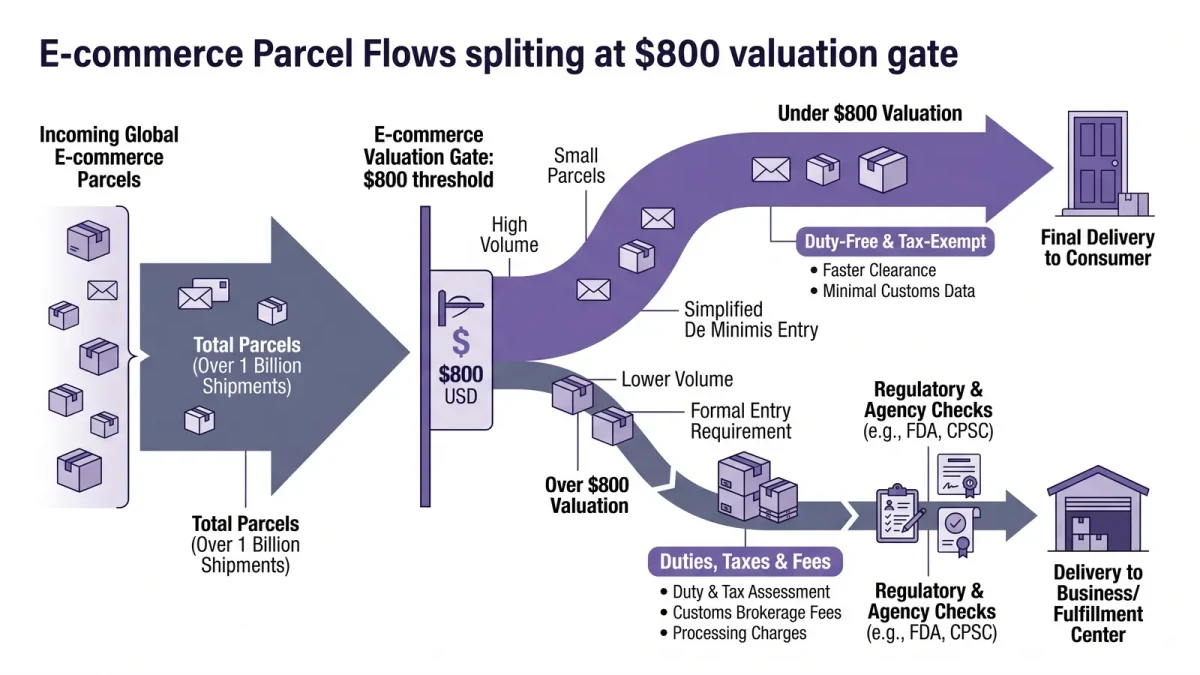
Yes, with the times. The 2025 tariff expansions made every classification and origin call worth multiples of its prior value, and CBP redirected audit resources toward revenue-sensitive lines: tariff-program goods, first-sale valuations, and origin determinations supporting exclusions. E-commerce importers entered scope as de minimis narrowed — the formal-entry migration brought millions of new entries under conventional audit exposure. The structural advice stands regardless of cycle: the audit tests the file, and the file is built years before the letter.