Incoterms are a set of 11 standardized trade terms published by the International Chamber of Commerce (ICC) that allocate between buyer and seller the costs, risks and logistical tasks of delivering goods — loading, freight, insurance, terminal handling and duty. The current edition, Incoterms 2020, took effect January 1, 2020, and remains in force as of 2026; the ICC announced the 2020 edition will continue until a successor is finalized. The single most consequential thing they determine is the delivery point at which risk of loss passes, which is frequently not where companies assume it does.
USA Post publishes information about trade compliance, not legal advice. Contract parties should have counsel map Incoterms choices to their actual logistics before signing.
What are Incoterms and why do they exist?
Incoterms — short for International Commercial Terms — were first published by the ICC in 1936 to solve a recurring problem: phrases like "FOB" and "delivered" meant different things in different jurisdictions. Each term is a three-letter code paired with a named place, such as "FOB Long Beach" or "DAP Chicago O'Hare." Used correctly and incorporated by reference into a contract of sale, the code fixes who books carriage, who pays each leg, who bears risk at each stage, who handles export and import clearance, and who must insure the cargo. The ICC's 2020 edition groups the terms by mode: any mode (EXW, FCA, CPT, CIP, DAP, DPU, DDP) and sea and inland waterway only (FAS, FOB, CFR, CIF).
Where does risk actually transfer under each term?
| Term | Risk passes | Who pays main carriage | Insurance obligation |
|---|---|---|---|
| EXW | At seller's premises, unloaded | Buyer | None imposed |
| FCA | When handed to buyer's carrier at named place | Buyer | None imposed |
| FOB | On board the vessel | Buyer | None imposed |
| CFR | On board the vessel | Seller | None imposed |
| CIF | On board the vessel | Seller | Seller must insure, 110% CIF value |
| CIP | When handed to first carrier | Seller | Seller must insure, all-risk cover (Incoterms 2020) |
| DAP | At named destination, ready for unloading | Seller | None imposed |
| DDP | At named destination, ready for unloading | Seller | None imposed |
The counterintuitive row is C-terms: under CFR, CIF and CPT, risk passes at origin even though the seller pays for freight to destination. If the vessel sinks mid-ocean under CIF terms, the buyer — not the seller — owns the loss, which is why Incoterms 2020 requires CIF sellers to obtain only minimum cover while CIP sellers must obtain all-risk cover.
Which mistakes most often generate disputes?
Four patterns dominate. First, "FOB" applied to containerized cargo: container yards operate before the vessel arrives, so the ICC recommends FCA instead, and using FOB for containers creates a gap where nobody clearly bears risk at the terminal. Second, EXW used by sophisticated buyers who forget the seller has no obligation to load the goods or complete export declaration — and U.S. export-control rules treat the U.S. principal party in interest, usually the seller, as the one whose filings matter. Third, DDP accepted by sellers who discover too late that acting as importer of record requires a customs bond and exposes them to destination-country duty, penalty and tax liability. Fourth, contracts that reference a term but name no place, or name a city rather than a terminal, leaving the delivery point ambiguous.
How do Incoterms interact with customs and tariffs?
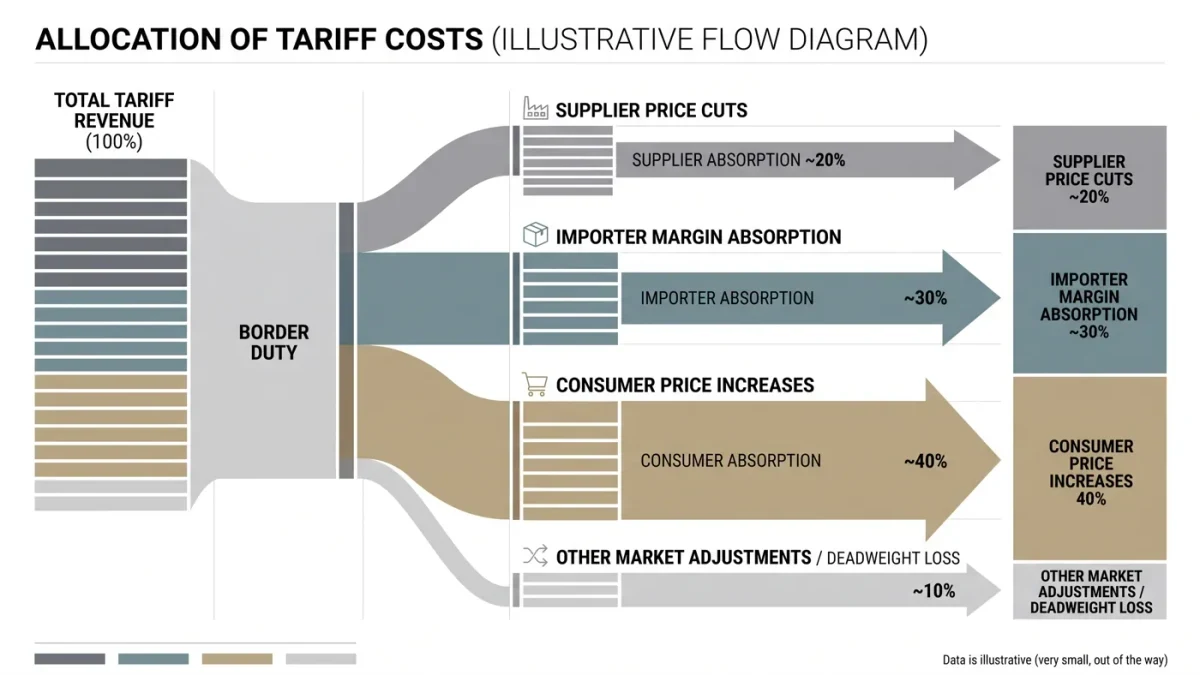
Incoterms do not decide who is the importer of record or who ultimately bears tariff cost as a matter of customs law — only what the two parties agreed between themselves. A DDP seller who agreed to bear "all costs to destination" absorbs new tariffs imposed after signing, an issue that grew sharply in materiality as U.S. tariff schedules moved repeatedly in 2025. Companies responding to tariff changes by renegotiating terms should document the change by written amendment naming the new term, edition, and place; a string of emails referencing "FOB as before" has produced litigation over which side of a 2025 tariff increase a shipment fell.
How should a company choose the right term?
- Match the term to the physical reality of the shipment: FCA for containers, sea terms only for breakbulk and bulk cargo.
- Decide deliberately who controls carriage — control of the carrier is control of the routing, the customs broker and the data.
- Price insurance consciously: under CIP the seller must buy all-risk cover; under FCA and DAP nobody is obliged, so each side should bind its own.
- Name the place precisely, down to the terminal or address, and cite "Incoterms 2020" in the contract.
- Revisit terms whenever duty regimes change, and paper every amendment.
Does an Incoterm answer every question in a shipping dispute?
No. Incoterms allocate delivery risk and task; they do not transfer title, set payment terms, govern remedies for breach, or choose the governing law. Those come from the sale contract itself, the UCC or the UN Convention on Contracts for the International Sale of Goods, and any arbitration clause. A contract that says "CIF Houston, Incoterms 2020" has answered one question well — and left a dozen others to be settled by documents that should be drafted with equal care.